

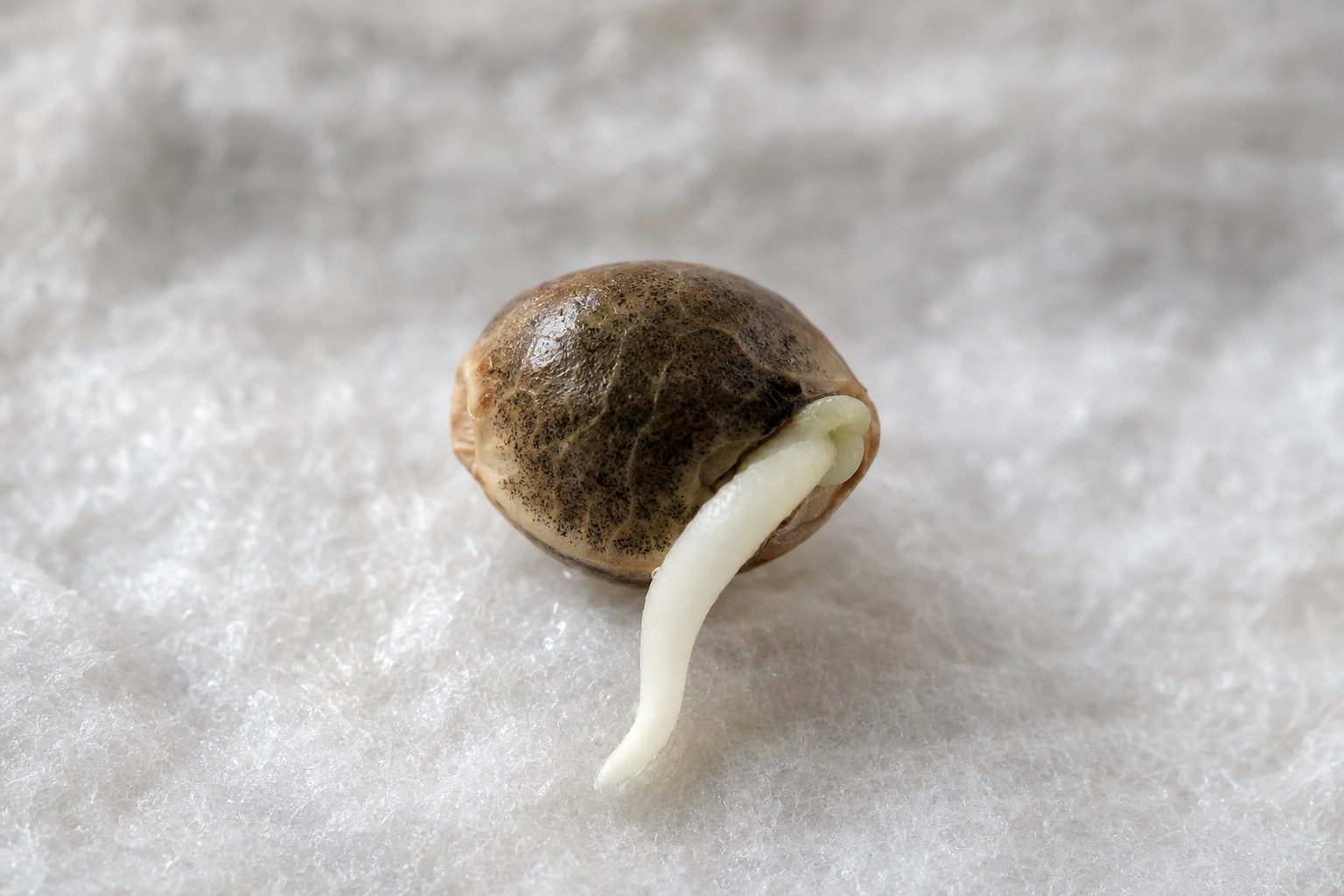
To germinate cannabis seeds, give them steady warmth, moisture, darkness and air. You can place seeds between damp paper towels, sow them directly into a light growing medium, or soak them briefly in water before planting. Paper towels offer visibility, soil requires less handling, and water is best used as a short first step rather than a complete method.
By the Kiwi Seed Bank grow team.
Key takeaways
- Paper towel: Easy to monitor and useful when you want to confirm that a taproot has emerged, but the delicate root must be transferred carefully.
- Direct soil: The simplest low-handling option. Moisture control is less visible, so an airy medium and gentle watering are important.
- Water soak: Useful for hydrating the seed shell before moving the seed to paper towel or soil. Avoid leaving a sprouted seed submerged.
- Conditions: Aim for stable warmth, a consistently damp environment and access to air. Saturated conditions can reduce oxygen around the seed.
- Timing: Check seeds regularly, but do not repeatedly handle, squeeze or open them. Some viable seeds simply take longer than others.
Before germinating cannabis seeds in New Zealand
Check the current law before you begin
Before germinating or growing cannabis seeds, check the laws that currently apply in New Zealand and any requirements relevant to your circumstances. Rules can change, and possessing a seed does not necessarily mean germination or cultivation is permitted. Our guide to whether cannabis seeds are legal in New Zealand provides general background, but it is not legal advice.
Also think about where a seedling would go after germination. Starting a seed without a suitable next stage can result in stretching, weak growth or damaged roots. Prepare the first container, growing medium, labels and seedling environment before adding moisture to the seed.
Choose between feminised, autoflower and regular seeds
The physical germination process is broadly the same for feminised, autoflower and regular seeds. Their later growth patterns differ, however, so your seed type can influence planning. Feminised seeds are selected to produce female plants in most cases, while regular seeds may produce male or female plants. Autoflower seeds begin flowering according to age rather than relying entirely on seasonal changes in daylight.
Autoflower seedlings are often placed in their intended container early because avoidable root disruption can use part of their relatively short growth period. Regular seedlings may require extra space until their sex becomes apparent. See our comparison of feminised, autoflower and regular seeds before choosing a setup.
Prepare a clean, stable germination space
Use clean hands and clean containers. Germination does not require intense light, fertiliser or a complicated propagator. It does require consistent conditions. A temperature around 22–25°C is a practical target for many cannabis seeds. Large swings, cold windowsills and direct heat from appliances can make moisture and temperature difficult to manage.
The germination material should feel evenly damp rather than dripping wet. Seeds need moisture to begin growth, but they also need oxygen. If paper, soil or another medium remains saturated, oxygen availability falls and unwanted fungal growth becomes more likely. Use plain water and avoid adding nutrients while the seed is opening; the seed contains stored energy for this first stage.
How to germinate cannabis seeds with the paper towel method
Set up the damp paper towel
Moisten two plain, unscented paper towels with clean water. Gently squeeze or let them drain until they are damp but not dripping. Place one towel on a clean plate or inside a clean food container. A container with a loose-fitting lid can slow moisture loss, but it should not become a pool of condensation.
Avoid highly textured, scented or dyed paper. Fine new roots can catch in coarse fibres, making transfer harder. If your tap water has an unusually strong odour or leaves heavy mineral marks, suitable fresh water from another reliable household source may be easier to work with.
Place and cover the seeds
Set the seeds several centimetres apart on the first towel, then place the second damp towel over them. Leave enough space to lift each seed without touching another root. Label different seed types clearly. Put the plate or container somewhere dark, stable and warm, away from direct sunlight and strong heating vents.
Do not seal the container completely without any air exchange. Check that the towels remain damp, adding a small amount of water around them if necessary. Pouring directly onto the seeds can move or submerge them. In a closed container, excess condensation is a sign that the setup may be too wet or experiencing temperature swings.
Check for a taproot without disturbing it
Inspect the seeds about once or twice daily. Lift the top towel slowly rather than peeling or dragging it across the seeds. A germinated seed usually shows a split shell and a small white taproot. Many seeds open within one to several days, although age, storage history and individual vigour can alter the timing.
Do not force open a shell or pull at a root. Avoid waiting for the taproot to grow long and weave into the paper. A visible root several millimetres long is generally enough for transfer. If the towel begins drying, remoisten it gently. If it smells stale or develops visible mould, reassess cleanliness, airflow and excess moisture.
Transfer the germinated seed into soil
Fill a small container with lightly moistened, airy seedling medium. Make a shallow hole around 0.5–1 cm deep. With clean tweezers or clean fingers, handle the seed shell rather than the white root. Place the taproot downward when its direction is obvious, then cover it lightly without pressing the surface hard.
If the root has curved, do not straighten it. Position the seed gently and let growth orient itself. Keep the medium evenly damp, not waterlogged, while the shoot moves towards the surface. Once it emerges, introduce suitable light promptly to reduce stretching. Our cannabis seedling care guide covers the next stage.
How to germinate cannabis seeds directly in soil
Prepare the growing medium and container
Choose a fine, airy seed-starting medium that drains freely while holding moderate moisture. Heavy garden soil can compact around a new root, while a strongly enriched mix may be excessive for a young seedling. Use a clean container with drainage holes and moisten the medium evenly before sowing. It should hold together lightly when squeezed but should not release water.
A small first container makes moisture easier to judge, although growers starting autoflowers may favour a larger intended container to minimise later root handling. Larger containers contain more wet medium and can stay damp for longer, so apply water in a modest area around the sowing point rather than soaking the entire volume repeatedly.
Plant the seed at a shallow depth and cover it lightly
Make a hole approximately 0.5–1 cm deep. Place the seed in the hole and cover it loosely with fine medium. Seed orientation is not critical because the emerging root responds to gravity, but placing the slightly pointed end downward can shorten the route into the soil. Do not compact the covering layer.
Mark the planting spot and label the container. This helps you avoid digging to check progress, which can damage a newly opened seed. Keep the surface damp with a fine spray or carefully placed small amounts of water. A clear humidity cover may slow drying, but allow some fresh air and remove the cover after emergence.
Wait for the seedling to emerge
Direct-sown seeds may emerge within several days, though some need longer. The lack of visibility is the main drawback of this method. Resist the urge to uncover the seed. Instead, monitor the medium’s moisture, temperature and drainage. A cool, saturated pot is more likely to cause problems than a warm, evenly damp one.
When the curved shoot breaks the surface, provide gentle light and stable conditions. The first rounded leaves are cotyledons; the recognisable serrated leaves follow. A shell may remain attached briefly. Usually, moisture and normal growth release it. Pulling it off too early can damage the soft leaves underneath.
How to germinate cannabis seeds using water
Use water as a short hydration stage
Fill a clean glass with room-temperature water and add the seeds. Place the glass in a dark, stable location. Some seeds float initially and later sink as they take on moisture, but floating or sinking does not reliably confirm viability. Avoid squeezing or repeatedly pushing them below the surface.
Check the seeds periodically and move them to damp paper towel or soil once the shell opens or after a short soak of roughly 12–24 hours. A little extra time may suit a hard, older shell, but extended submersion reduces access to oxygen. Water-only germination becomes less suitable once a white root is exposed.
Move soaked seeds carefully
Pour the water through a clean fine strainer or lift each seed gently with a spoon. If no root is showing, transfer the hydrated seed to paper towel for visibility or sow it directly into prepared medium. If a root has appeared, avoid touching it and plant the seed promptly.
The water method is often best viewed as an optional opening step, not a place to keep seedlings. It can offer uniform contact with moisture, but it provides little physical support and makes oxygen management harder than paper towel or an airy medium.
Paper towel vs soil vs water: which method is best?
No single method suits every grower. Paper towel offers the clearest view and makes it easy to separate seeds that open at different times. Its main disadvantage is transfer: exposed taproots are fragile and can dry quickly. Direct soil avoids that move and lets the root establish in place, but you cannot see what is happening below the surface.
A water soak is quick and simple, especially as a preliminary stage, but it is less forgiving if seeds are forgotten. For a first attempt, choose either paper towel with careful transfer or direct sowing in a light medium. Consistency matters more than adding multiple steps. Moving a seed repeatedly between water, paper and soil can create needless handling.
- Choose paper towel if you value visibility and can transfer the seed steadily.
- Choose direct soil if you prefer minimal handling and can manage moisture confidently.
- Choose a short water soak if you want to hydrate the shell before using either main method.
Spring grow calendar and regional notes for New Zealand
September
Early spring can still bring cold nights, particularly inland and in the South Island. Indoor germination offers more stable warmth, but do not begin solely because the calendar says spring. Work backwards from when suitable conditions and space will be available. Review when to plant cannabis in New Zealand as part of your planning.
October
Days lengthen and many northern areas become milder, while exposed southern sites may remain changeable. Seedlings started indoors should not move abruptly into intense sun, wind or cold. Acclimatise them gradually over several days and continue watching overnight temperatures.
November
Late spring generally brings stronger light and warmer conditions, although New Zealand weather remains variable. Northland and Auckland growers may face warm humidity; Canterbury and Otago growers may need to plan around cool nights, dry winds or late cold snaps. Wellington’s wind can rapidly dry small containers. Match watering to the medium rather than using a fixed timetable.
For broader planning after germination, read our New Zealand cannabis growing guide. Whatever method you choose, keep the process simple: stable warmth, gentle moisture, clean equipment, patient observation and minimal contact with the emerging root.