

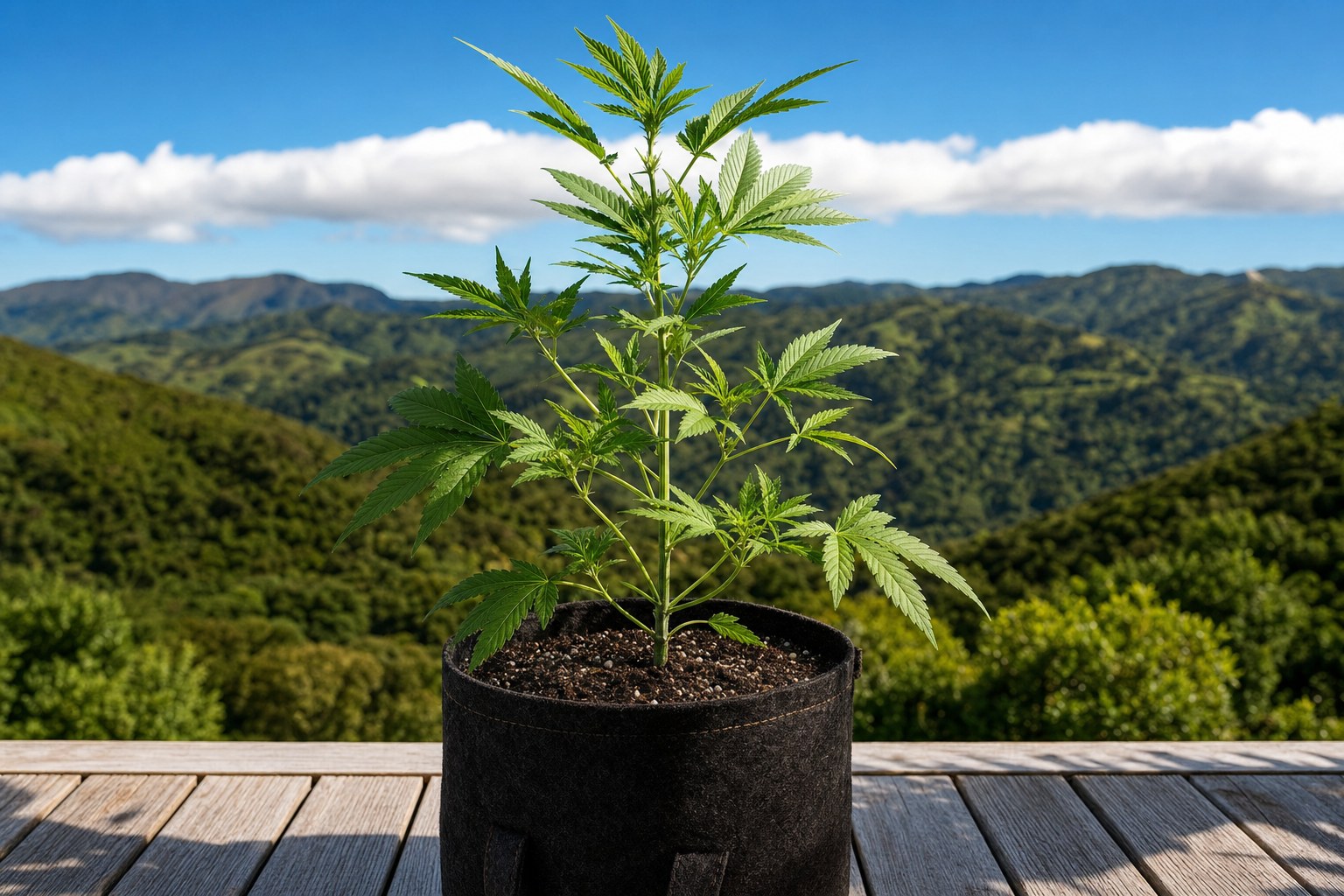
Growing cannabis in New Zealand requires an understanding of current law, basic plant biology and the country’s southern-hemisphere seasons. Personal cultivation may be unlawful without the required authority, so check current official guidance before making plans. This beginner’s guide explains the subject at a high level without providing step-by-step instructions for cultivating a controlled plant.
By the Kiwi Seed Bank grow team
Key takeaways
- Check the law first: cannabis cultivation is controlled in New Zealand, and rules or permissions can change.
- Use official guidance: verify requirements through current New Zealand government information rather than relying on old articles, social posts or overseas advice.
- Understand the plant: cannabis is an annual flowering plant whose development is influenced by genetics, maturity, daylight, temperature, moisture and general growing conditions.
- Think in southern-hemisphere seasons: spring begins around September, summer around December, autumn around March and winter around June.
- Allow for regional variation: Northland humidity, Wellington wind, Canterbury dryness and southern cold create very different gardening environments.
- Keep learning non-actionable: beginners can study botany, seasonal patterns and responsible garden management without undertaking unauthorised cultivation.
Before You Begin: Check Current New Zealand Law
Anyone searching for how to grow weed in NZ should begin with legal status rather than seeds, pots or garden equipment. Cannabis is a controlled plant in New Zealand. Cultivation, possession, supply and related activities may carry legal consequences unless they occur within an applicable authorised framework. A prescription or permission to use a cannabis product does not automatically mean a person may grow cannabis at home.
This article is general educational material, not legal advice or a cultivation manual. Do not assume that private property, a remote location or personal use changes the relevant rules. Renting or owning a home also does not replace any statutory requirements, local obligations, tenancy terms, body corporate rules or insurance conditions that may apply.
If you are involved in an authorised research, industrial hemp or commercial activity, the applicable framework may include licences, specified locations, approved varieties, record keeping and other controls. Those settings are distinct from informal home growing. Confirm exactly which framework applies to you before obtaining controlled plant material or making cultivation plans.
Why Rules and Permissions May Change
New Zealand’s cannabis settings sit across legislation, regulations, licence conditions and administrative guidance. These can be amended over time. A statement that was accurate several years ago may no longer describe current requirements, available permissions or enforcement settings. Overseas information can also be misleading because another country’s home-growing rules do not apply automatically in Aotearoa.
Context matters as well. Industrial hemp, authorised research, regulated commercial production and possession of finished products can fall under different rules. Similar-looking plants or products are not necessarily governed in the same way. Avoid relying on assumptions based on plant appearance, cannabinoid labels or information intended for a different activity.
Where to Find Official, Up-to-Date Guidance
Look for current information on New Zealand government websites and read the publication or review date. Relevant material may explain controlled plants, licensing pathways, industrial hemp, regulated products and responsibilities for authorised organisations. If wording is unclear, contact the responsible public agency or seek advice from a qualified New Zealand legal professional.
When checking guidance, confirm that it applies to New Zealand, your intended activity and the current date. Save a record of any formal permission relevant to an authorised project and read all attached conditions. Do not interpret silence, online availability of seeds or anecdotal stories as permission. Product availability and legal authority are separate questions.
Understanding the Cannabis Plant at a High Level
Cannabis is generally grown as an annual, meaning its natural life cycle is completed within one growing season. Like other flowering plants, it uses light for photosynthesis, takes up water and mineral nutrients through its roots, and exchanges gases through leaf surfaces. Its structure commonly includes a main stem, side branches, fan leaves, growing tips and flowers.
Genetics influence potential height, branching, flowering behaviour, aroma, colour and the balance of plant compounds. Environmental conditions influence how those inherited traits are expressed. Neither genetics nor an appealing seed description guarantees a particular result. Plant health always reflects an interaction between inherited characteristics and the surrounding environment.
Cannabis plants may have male or female reproductive structures, while some can show mixed characteristics. Feminised seed is intended to increase the likelihood of female plants, but it should not be understood as an absolute promise. Autoflowering types respond differently to seasonal daylight than photoperiod types, although both remain affected by general environmental stress and plant health.
The General Plant Life Cycle
The life cycle starts with a viable seed. Under suitable natural conditions, a seed may germinate and produce an initial root and shoot. The seedling stage follows, with early leaves and a small root system. Young plants are comparatively vulnerable to physical damage, excessive moisture, dryness, temperature swings and competition.
During vegetative development, the plant produces stems, leaves and branches. Photosynthetic leaf area expands while the root system occupies more of its available space. As the plant reaches maturity, reproductive growth becomes more prominent. In photoperiod cannabis, changing day length is an important seasonal signal; autoflowering genetics rely more strongly on plant age.
Flowering is followed by late-season ageing. Leaves may change colour or decline as an annual plant approaches the end of its natural cycle. Pollinated female flowers can form seeds, while unpollinated flowers develop differently. This broad sequence explains the plant’s biology without serving as an operational timetable or a guide to harvesting.
Environmental Factors That Influence Plant Health
Light supplies energy for photosynthesis and also provides seasonal information. Its intensity, duration and direction vary with latitude, cloud, shade and time of year. New Zealand’s long summer days differ from short winter days, while a shaded valley can receive a very different light pattern from an open coastal site.
Temperature affects biological processes, water use and growth rate. A sheltered northern garden may remain relatively mild while an inland South Island location experiences frost and sharp day-to-night changes. Heat reflected from walls, decks or paving can also create a small local climate unlike the wider weather forecast.
Water and humidity shape root and leaf conditions. Too little water can limit growth, while persistently saturated material can reduce air around roots. High atmospheric moisture can contribute to mould pressure, especially where foliage stays damp and air movement is limited. Rainfall totals alone do not show how long a site remains wet.
Air movement influences evaporation, temperature and physical stability. Gentle airflow and severe wind are not equivalent. Exposed coastal and hill locations can experience salt-laden gusts, while enclosed spaces may hold humid air. Healthy garden planning considers both airflow and shelter without sealing plants into stagnant surroundings.
Root environment and nutrition also matter. Roots require a workable balance of moisture, air and mineral availability. Extreme acidity, alkalinity or salt accumulation can interfere with nutrient uptake. More fertiliser is not automatically better, and visible leaf changes can have several possible causes. Guessing from a single symptom is unreliable.
New Zealand’s Southern-Hemisphere Seasons
A New Zealand grow calendar runs opposite to calendars written for Europe or North America. Meteorological spring covers September to November, summer December to February, autumn March to May and winter June to August. Actual conditions do not switch neatly on the first day of a season, so gardeners should observe local weather, latitude and microclimate.
Spring: Increasing Daylight and New Growth
Spring brings lengthening days, rising average temperatures and renewed growth across many garden species. Conditions can still be unsettled. Late frosts affect inland and southern districts, while heavy rain, hail and strong winds can occur nationwide. Soil and containers may remain cold even when daytime air feels warm.
For cannabis education, spring is best understood as the opening phase of the natural annual cycle. Increasing daylight supports vegetative development in photoperiod plants. However, a calendar date alone says little about whether conditions are stable. Auckland, Nelson, Queenstown and Dunedin can have markedly different spring patterns.
Summer: Warmer Conditions and Longer Days
Summer generally delivers the longest days and highest average temperatures. Northern and eastern regions may experience dry periods, while humid northern weather can keep nights warm and foliage damp. Intense ultraviolet exposure, hot decks and rapid changes between sun and thunderstorms add complexity to New Zealand gardens.
Many annual plants make substantial vegetative growth during long days. Water demand often rises with warmth, leaf area and wind, but it remains linked to the actual root environment rather than a universal schedule. Responsible gardeners follow local water restrictions and avoid assuming that advice written for another climate fits their region.
Autumn: Shortening Days and Seasonal Change
Autumn brings shorter days and, in many areas, cooler nights. For mature photoperiod cannabis, declining day length is associated with reproductive development. The pace of seasonal change varies by genetics, latitude and weather, so broad labels such as early or late should be regarded as descriptive rather than guaranteed.
Rain, dew and reduced drying conditions can increase mould pressure as autumn advances. Coastal areas may remain mild, whereas inland districts can move quickly towards frost. This seasonal overlap is one reason overseas calendars are poor substitutes for local observation. New Zealand’s maritime climate can produce rapid weather changes within a single week.
Winter: Cooler Conditions and Reduced Daylight
Winter has the shortest days, lower sun angles and cooler average conditions. Frost is common in many inland and southern areas, and snow is possible in elevated districts. Northern regions are generally milder but can still experience cold snaps, saturated ground and prolonged rain.
For outdoor annual cannabis biology, winter is usually outside the main natural growth cycle. Reduced light and low temperatures limit vigorous development. Rather than viewing winter as simply an obstacle, beginners can use it to study legal requirements, garden ecology, composting principles, weather records and the needs of lawful seasonal plants.
Regional Notes for New Zealand Gardeners
Northland and Auckland: Longer warm periods and relatively mild winters distinguish the upper North Island. Humidity, heavy rain and warm nights can keep plant surfaces damp. Local exposure varies greatly between sheltered urban sections, ridgelines and salt-affected coastal sites.
Waikato, Bay of Plenty and central North Island: Fertile-looking landscapes do not mean every garden has the same soil or drainage. Fog, rainfall and humidity vary, and central plateaux can be much colder than nearby coastal districts. Frost pockets often form in low-lying areas.
Gisborne and Hawke’s Bay: These eastern districts can be sunny and comparatively dry, but wind, water limits and sudden heavy rain remain relevant. Slopes, valleys and coastal exposure create strong microclimates. Regional drought declarations or watering rules should always be respected.
Wellington and the lower North Island: Wind is a defining factor in many locations. A site that appears sunny may experience repeated gusts or accelerated moisture loss. Valleys and sheltered suburbs can behave very differently from exposed hills and coasts.
Nelson, Marlborough and Canterbury: High sunshine hours occur in parts of these regions, yet dry air, strong wind and cooler nights can be significant. Canterbury’s nor’west conditions can change quickly, while inland and elevated areas carry greater frost exposure.
West Coast, Otago and Southland: The West Coast commonly experiences high rainfall and persistent atmospheric moisture. Otago combines dry inland zones, cold nights and coastal variation. Southland’s cooler climate, wind and shorter warm season distinguish it from northern growing conditions.
Responsible Gardening Considerations in New Zealand Conditions
Responsible gardening starts with lawful authority and respect for other people. Odour, visibility, lighting, noise, water use and structures can affect neighbours or shared property. Tenancy agreements, body corporate rules and local planning requirements may impose obligations even where a general gardening activity is otherwise allowed.
Environmental responsibility also matters. Avoid releasing non-native plants or unwanted seed into waterways, reserves, farms or neighbouring land. Keep garden waste within lawful disposal systems, minimise runoff and use water thoughtfully. Pets, children and wildlife should not have access to controlled plant material or gardening products that may be harmful if swallowed.
Biosecurity is especially important in New Zealand. Unauthorised plant material can carry insects, fungi, soil organisms or weed seeds. Bringing seeds or living material across the border is subject to strict controls, separate from cannabis law. Online ordering does not remove those obligations.
For beginners, the safest educational path is to build transferable horticultural knowledge with lawful plants. Learn how sunlight moves across a property, how rain drains, where frost settles and which areas receive strong wind. Keep weather notes and observe how common annual flowers or vegetables respond through the seasons.
Ultimately, there is no single nationwide formula for how to grow weed in NZ. Law, genetics, latitude, weather and microclimate all matter, while unauthorised cultivation can carry serious consequences. Start by checking current official requirements, then keep any learning focused on high-level botany, seasonal awareness and responsible New Zealand gardening.