

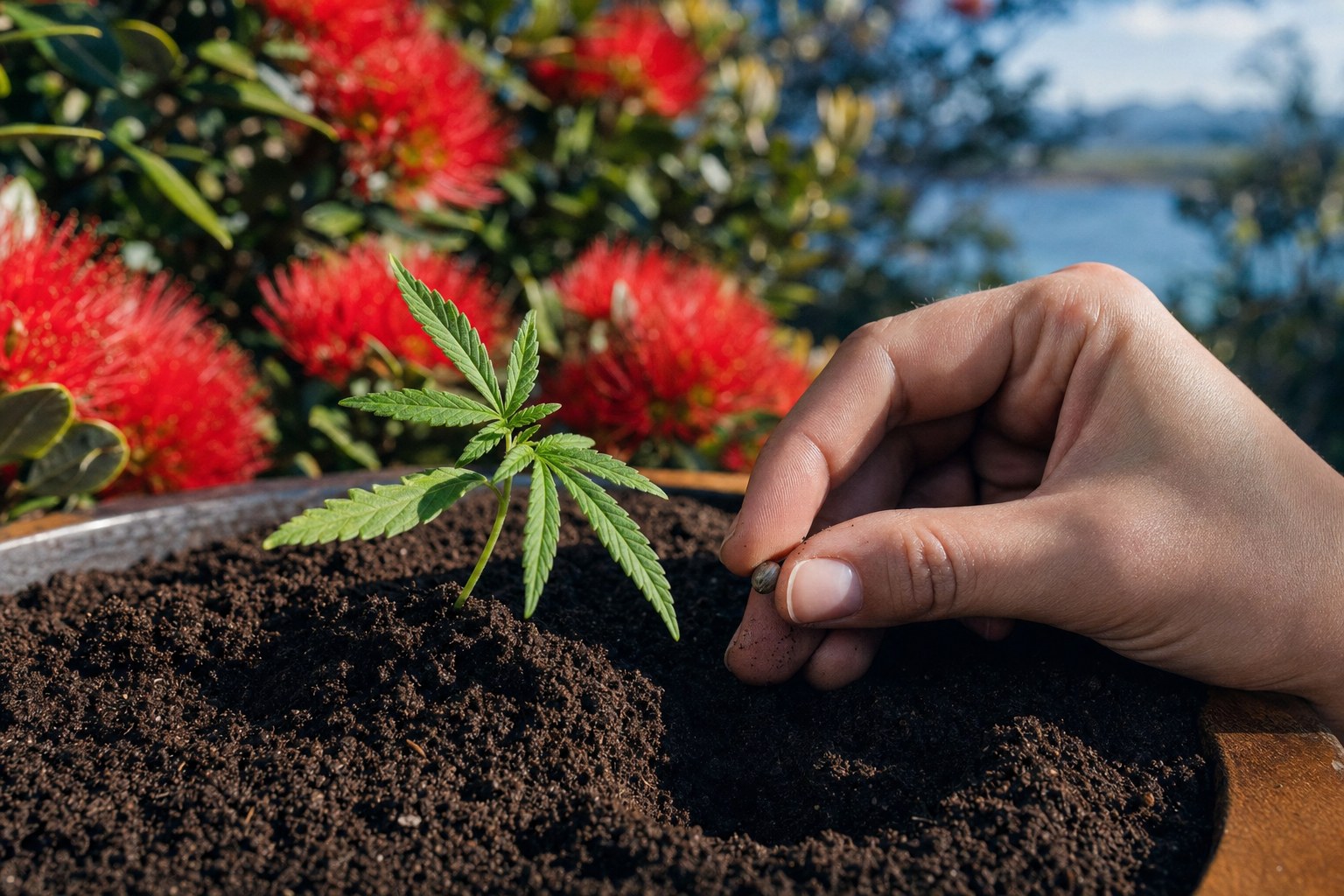
For most outdoor New Zealand gardens, cannabis is planted from late September to November, after local frost risk has eased and spring conditions have settled. Warmer northern regions may suit earlier planting, while colder southern and inland areas often require a later start. Local temperature, daylight, wind and rain matter more than a single nationwide date.
Key takeaways
- Late September to November is the main outdoor planting window across much of New Zealand.
- Northland and other mild northern areas may have suitable conditions earlier than cooler regions.
- Frost-prone and southern locations generally benefit from waiting until consistent spring warmth arrives.
- October and November offer a practical balance of increasing daylight, warmer soil and lower frost risk in many gardens.
- Microclimate matters: slope, shelter, sunlight, drainage and proximity to the coast can shift timing by several weeks.
- Anyone considering cannabis cultivation should first check current official guidance and understand any permissions or restrictions that apply.
When to plant weed in NZ: the short answer
The short answer to when to plant weed in NZ is spring, usually between late September and the end of November. October is a common target in many North Island gardens, while November may be more suitable for frost-prone parts of the central plateau and South Island. The right week depends on local weather rather than the calendar alone.
Young plants favour settled conditions. Cold soil, sharp overnight temperature drops, persistent rain and exposed winds can all slow early development. Waiting for a mild forecast can therefore be more useful than planting automatically on the first day of spring. Look for improving overnight temperatures, warming soil and several days of calm weather.
Starting too early does not necessarily produce a stronger or larger plant. A seedling that spends weeks under weak light or cold stress may develop more slowly than one planted later in stable conditions. Equally, a very late start shortens the available vegetative period before naturally decreasing daylight begins to influence seasonal development.
Understanding New Zealand’s outdoor growing calendar
New Zealand has a southern-hemisphere growing cycle. Daylight increases from late winter towards the summer solstice in December, then gradually decreases through summer and autumn. Cannabis responds to this seasonal pattern, although exact behaviour differs between seed types and individual plants. Temperature, root space, nutrition and weather also shape growth.
The calendar below is a broad guide rather than a fixed schedule. New Zealand stretches across several climate zones, and conditions can vary substantially over short distances. A sheltered coastal garden may warm weeks before an exposed inland property at a similar latitude.
Spring (September to November): planning and early growth
September brings longer days, but it remains changeable in many regions. Northland and sheltered northern coastal sites may already have mild conditions, while late frosts remain possible through much of the country. September is generally a time to assess the site, observe sunlight and wait for a stable weather window rather than relying on the season’s name.
October often marks the practical beginning of outdoor planting in warmer parts of the North Island. The sun is stronger, days are lengthening and soil begins warming more consistently. Exposed gardens can still experience cold southerly changes, heavy rain or strong spring winds, so local shelter remains important.
November is a dependable planting month for many temperate areas. It is also a more cautious option for cooler districts once frost risk has eased. Later planting may mean less time for vegetative growth, but young plants can establish rapidly when warmth, moisture and daylight align. Avoid placing a small seedling directly into an exposed position during extreme wind or a sudden hot spell.
Summer (December to February): peak light and active growth
December delivers some of the year’s longest days. Established plants commonly enter a period of active vegetative growth, supported by strong light and warm soil. Plants started in spring may need more frequent observation as their demand for water and root space increases. Mulch around, but not against, the stem can help moderate soil temperature and moisture loss.
December planting is possible, especially in warm districts or where a compact seasonal schedule is preferred. However, later starts have fewer long days available than October or November starts. The resulting size and timing vary with genetics, site quality and weather, so calendar dates should not be viewed as promises of a particular outcome.
January and February can bring dry soil, intense ultraviolet exposure and warm north-westerly winds. Coastal humidity and summer rainfall may also increase moisture around dense foliage. Water should reach the root zone without leaving the site continually saturated. Good airflow, adequate spacing and tidy ground around plants help reduce the risk of persistent dampness.
Autumn (March to May): cooler days and seasonal change
By March, daylight is noticeably shorter and night temperatures begin to fall. Many seasonal plants move further into flowering as autumn develops. This is not generally the main time to begin an outdoor photoperiod crop because the long vegetative window has passed. Autoflowering seeds follow a less daylight-dependent schedule, although cold and wet weather can still affect their performance.
Rain, dew and humidity become increasingly significant through April and May. Dense growth that stays wet for long periods has a higher risk of mould. Air movement and protection from prolonged rain can be useful, provided any cover remains well ventilated. Inspect flowers and foliage regularly, particularly after wet nights or several overcast days.
Regional differences are pronounced in autumn. Northern coastal districts may remain mild well into the season, whereas inland and southern locations can cool quickly. Forecasts, sunrise times and overnight lows offer more useful guidance than a national finishing date.
Winter (June to August): preparation for the next season
Winter is primarily a planning period for outdoor growers. Daylight is short, soils are cool and wet weather is common in many areas. Frosts are frequent inland and across much of the South Island. These conditions are poorly suited to ordinary outdoor seedling establishment.
Use winter to map the movement of the sun, review drainage and select a position that will receive strong spring and summer light. Trees, fences and buildings cast much longer shadows during winter, so remember that the sun’s path will rise higher as summer approaches. The chosen site should combine sunlight with airflow and some shelter from damaging wind.
Soil preparation can also begin well before planting. A loose, well-drained structure is preferable to compacted ground that holds water around roots. Raised areas may help in heavy clay, while very sandy soil may need more organic matter to hold moisture. Make changes gradually and allow the site to settle before spring.
How timing varies across New Zealand
Latitude shapes day length and temperature, but it is only one part of the decision. Elevation, coastal influence, rainfall and terrain can create distinct local climates. Regional notes should therefore be combined with direct observations from the intended garden.
Northland, Auckland and other warmer northern areas
Northland, Auckland, Bay of Plenty and other mild northern districts often have the earliest workable outdoor window. Sheltered sites may be warm enough in late September or October, although spring storms and saturated soil can still make an early date unsuitable. Coastal locations generally experience fewer hard frosts than inland valleys.
Warmth does not remove every challenge. Humidity, heavy rain and vigorous surrounding vegetation can restrict airflow. Select an open, sunny position rather than a damp corner enclosed by fences or shrubs. In mild northern regions, October and November remain practical choices even when an earlier start seems possible.
Central and lower North Island regions
Waikato, inland Bay of Plenty, the central plateau, Hawke’s Bay, Taranaki, Manawatū and Wellington contain varied microclimates. Sheltered lowland sites may suit October planting, while elevated or frost-prone locations may be better left until late October or November. Cold air settles in hollows, making a gentle slope potentially warmer than nearby flat ground.
Wind deserves particular attention in exposed coastal and lower North Island gardens. Wellington’s frequent strong winds can dry containers quickly and damage soft new growth. Taranaki and western districts may receive substantial rainfall, while eastern areas can become dry during summer. Planting timing should fit both spring temperature and the site’s likely summer water supply.
South Island and cooler inland locations
Nelson, Marlborough and sheltered northern South Island sites may offer sunny, relatively early conditions, but late cold snaps remain possible. Canterbury, Otago, Southland and elevated inland districts generally have a narrower frost-free period. Late October through November is often the more cautious spring window, with some cold sites requiring patience beyond that.
Inland valleys can have warm days followed by very cold nights. Judge readiness by overnight lows and soil warmth, not daytime sunshine alone. Southern gardens also have long summer days, which can support active growth once plants are established. The trade-off is a shorter warm season and an earlier return of cool autumn conditions.
Factors that influence planting time
Daylight hours and direct sunlight exposure
Cannabis generally favours abundant direct light. Before planting, observe the proposed garden at several points during the day. A position that appears sunny at midday may be shaded in the morning or afternoon by a house, hedge or hill. As the sun’s angle changes, the amount of direct light will also change.
Morning sunlight can dry dew from foliage, while strong afternoon exposure can increase heat and water demand. An effective site balances long hours of light with reasonable airflow and access to water. Shelter should soften severe wind without enclosing the plant in still, humid air.
Frost dates, soil temperature and weather patterns
The final local frost is a valuable planting marker. Frost can damage tender growth, and cold soil slows root activity. Gardeners in frost-prone areas can monitor local forecasts and wait until the pattern of cold nights has passed. One warm weekend is less informative than a consistent run of mild nights.
Spring weather is unpredictable, so flexibility helps. If a forecast shows several days of driving rain, hail or powerful wind, delaying planting may reduce avoidable stress. Container-grown plants can be moved when young, but containers also heat and dry faster than open ground and can restrict roots if undersized.
Seed type and the available seasonal window
Photoperiod plants respond strongly to changing day length and usually benefit from an adequate spring and summer vegetative period. Feminised seeds are selected to produce female plants in most cases, but they still require suitable outdoor timing. Autoflowering plants develop according to age more than seasonal day length, making their planting window more flexible during warm months.
That flexibility does not make cold, low-light conditions ideal. Autoflowering plants have a limited growth period, so early stress can consume a meaningful part of their schedule. In many New Zealand regions, the warm and bright period from late spring through midsummer is the most practical window.
Privacy, permissions and responsible site selection
Any outdoor site should be private, discreet and inaccessible to children, visitors and animals. Odour can travel well beyond a boundary, and tall plants may become visible as summer progresses. Consider neighbours, shared access and property rules before making plans.
Cannabis rules and permissions can change, and this article is general cultivation information rather than legal advice. Check current official New Zealand guidance and any requirements relevant to your circumstances before proceeding. A horticulturally suitable season does not establish that cultivation is permitted.
A practical spring decision checklist
- Confirm that current rules and any required permissions have been checked.
- Review the usual final frost period for the specific location.
- Look for consistent overnight warmth rather than one unusually hot day.
- Confirm that the site receives several hours of direct sunlight.
- Check that rain drains away instead of pooling around the root zone.
- Choose shelter from severe wind while retaining airflow.
- Consider whether the variety’s expected seasonal pattern fits the regional climate.
- Delay planting if an intense cold, rain or wind event is forecast.
Grow team note: The best planting date is usually a weather window, not a calendar square. Across New Zealand, a settled week in October or November is often more useful than an exposed start several weeks earlier.
For most people asking when to plant weed in NZ, the practical answer remains late September to November, adjusted for local frost and warmth. Northern coastal gardens may begin near the early end, while southern, elevated and inland sites usually sit near the later end. Observe the garden, follow the forecast and let stable spring conditions set the pace.