

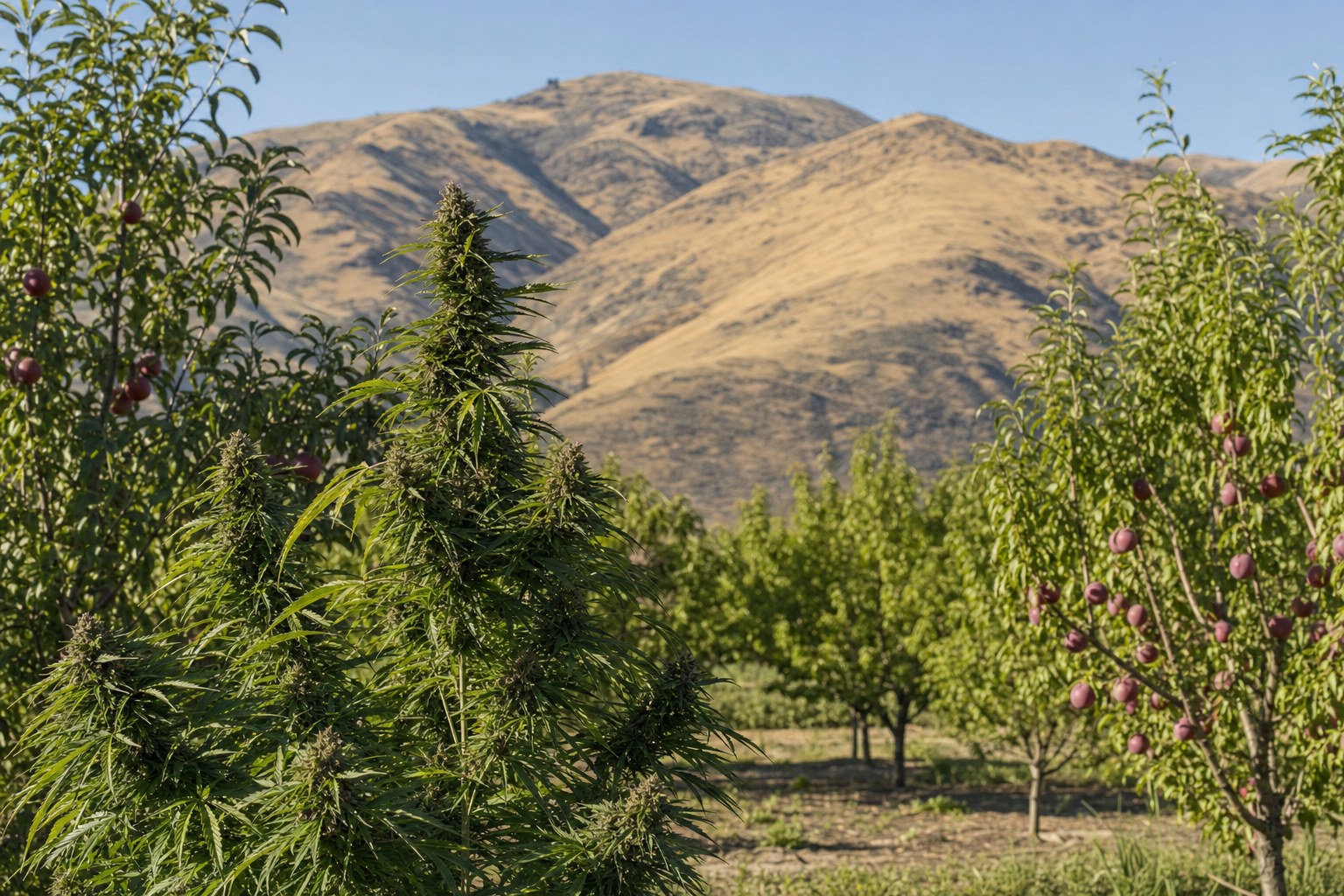
Growing weed in Otago calls for careful timing, a sunny sheltered position and genetics suited to a short, variable outdoor season. Central Otago offers intense summer light and dry air, but late frosts, strong winds, rapid moisture loss and cool autumn nights can challenge plants. Confirm current New Zealand law before making any cultivation plans.
By the Kiwi Seed Bank grow team.
Key takeaways
- Check the rules first: cannabis cultivation may be illegal without appropriate authorisation in New Zealand.
- Prioritise the site: seek full sun, good drainage, wind shelter and reasonable access to water.
- Wait through frost risk: Central Otago spring weather can remain cold well after daytime temperatures begin rising.
- Choose for the season: consider early maturity, compact structure and resilience rather than relying on strain labels alone.
- Water by observation: deep watering, mulch and regular soil checks suit the region better than a fixed timetable.
- Watch autumn closely: cold nights and unsettled weather can narrow the outdoor finishing window.
Growing weed in Otago: what makes Central Otago distinctive
Central Otago has one of New Zealand’s most continental climates. Mountain ranges limit maritime influence, helping create hot, bright summer days alongside cold nights and sharp seasonal changes. Conditions can differ markedly between a sheltered basin, an exposed terrace and an elevated hillside.
These contrasts create genuine outdoor potential, but they reward active observation. Strong ultraviolet light, low humidity and long sunny periods may support vigorous growth in a suitable position. At the same time, shallow soils, drying winds, frost pockets and sudden cold changes can place plants under stress. Results vary with site, weather, genetics and grower practices.
Check New Zealand law before planning a grow
Before buying seeds, preparing soil or raising seedlings, confirm the law that applies to your circumstances. Cannabis cultivation may be illegal in New Zealand without appropriate authorisation. Our guide to whether it is legal to grow cannabis in New Zealand provides a general starting point, but rules can change and personal circumstances differ.
This regional guide is cultivation information, not legal advice or permission to grow. Checking current official requirements should come before practical planning.
Exposure, elevation and local microclimates
Elevation can shorten the frost-free period, while cold air often settles in hollows and valley floors. A location only a few kilometres away may have different night temperatures, wind exposure and morning sun. Walls, hedges, rock, slopes and established orchard trees also influence a garden’s microclimate.
Observe where frost lingers, which direction damaging winds arrive from and how quickly soil dries after rain. A north-facing position commonly receives strong sunlight, although afternoon heat reflected by stone or metal can become excessive. Local observation is more useful than relying on a regional forecast alone.
Spring planning for Central Otago conditions
Spring is a planning and establishment period rather than a signal to rush outdoors. Prepare the site, drainage, shelter and watering arrangements while nights remain cold. Seedlings can be raised in a protected environment where lawful, then introduced gradually to brighter light and outdoor air.
Choosing a sunny, sheltered site
Look for direct sunlight across most of the day, particularly from late morning through afternoon. Avoid deep shade from buildings, dense shelter belts or stone-fruit trees once they are in full leaf. Allow enough space for airflow and future plant growth.
Shelter should soften wind without creating stagnant, damp air. A permeable windbreak is often more useful than a solid barrier that produces turbulence. Secure containers, screens and supports before exposed spring or summer conditions arrive. Discretion and secure access may also matter, subject to applicable law.
Preparing soil and managing late cold snaps
Central Otago soils range from fertile garden loam to thin, stony or compacted ground. Cannabis generally favours a loose root zone that drains freely while retaining useful moisture. Organic matter can improve water-holding capacity in sandy ground, while raised beds or containers may help where native soil is dense or poorly drained.
Prepare planting areas early and check drainage after watering. Mulch can moderate soil temperature and moisture loss, but leave a small gap around the stem. During a late cold snap, movable plants can be shifted under lawful shelter. Temporary covers may help outdoors, provided they do not press against foliage or trap excessive condensation.
Deciding when to move seedlings outdoors
Calendar dates are only a guide. Wait until local frost risk has eased, night temperatures are reasonably stable and seedlings have developed a sound root system. Our guide to when to plant cannabis in New Zealand explains seasonal timing in more detail.
Acclimatise seedlings over several days by increasing outdoor light and wind exposure gradually. Moving tender indoor growth straight into Central Otago sun can lead to bleaching, wilting or damaged leaves. See our cannabis seedling care guide for practical establishment principles.
Choosing seeds for a short, variable season
Seed choice can influence how comfortably a plant fits the available season. Instead of chasing a promised size or harvest date, consider growth duration, flowering behaviour, plant structure and the conditions described for the genetics. No seed type removes the influence of weather or care.
Comparing feminised, autoflower and regular seeds
Feminised seeds are selected to produce female plants, making them a practical option where lawful space is limited. Photoperiod feminised plants respond to changing day length, so their autumn finish still depends on genetics and local conditions.
Autoflower seeds begin flowering according to age rather than seasonal day length. Their shorter cycle may suit a brief warm window, but limited recovery time means early stress can have a larger effect. Read more about autoflowers for a short New Zealand summer.
Regular seeds can produce male or female plants. They require early identification and management where unwanted pollination is a concern. Our comparison of feminised, autoflower and regular seeds covers the trade-offs.
Traits to consider without relying on strain guarantees
Useful traits for Central Otago may include early maturity, sturdy branching, moderate height and tolerance of cool nights or variable moisture. An open flower structure can be advantageous if autumn turns damp. Browse the principles behind choosing outdoor strains for New Zealand rather than treating any cultivar as a guaranteed answer.
Descriptions indicate tendencies, not fixed outcomes. Individual plants vary, and the same genetics may perform differently across Alexandra, Cromwell, Wānaka, Queenstown or a higher rural site.
Summer care through heat, wind and dry spells
Central Otago summer can combine intense sun, low rainfall and persistent wind. Plants in containers are especially vulnerable because their root zone heats and dries faster than garden soil. Consistent monitoring is more valuable than reacting after severe wilt appears.
Watering consistently without waterlogging roots
Water deeply enough to moisten the active root zone, then allow some air to return to the soil before watering again. Check moisture below the surface with a finger or wooden probe; a dry crust can hide damp soil, while a mulched surface can hide dryness below.
Apply water slowly so it absorbs rather than running downhill. Morning watering reduces midday loss and gives foliage time to dry if splashed. Well-draining soil is essential because roots require both moisture and oxygen. Adapt frequency to heat, wind, container size and plant growth instead of following a fixed schedule.
Mulch with clean organic material to reduce evaporation and moderate temperature. Leaf droop, curling edges or pale, scorched patches may signal stress, but similar symptoms can have several causes. Check soil moisture and recent weather before changing multiple inputs at once.
Wind protection
Dry north-westerly winds can strip moisture from foliage and place leverage on branches. Install stakes or other supports early so roots are not disturbed later. Use soft ties with room for stem expansion, and inspect contact points regularly.
A mesh screen, spaced fence or established hedge can slow airflow while retaining ventilation. Avoid enclosing plants tightly. Prune only where necessary and lawful, as removing too much foliage during hot weather can expose previously shaded growth to harsh sun.
Feeding
Start with balanced soil rather than trying to correct every issue through bottled nutrients. Container plants may need more regular input because watering can wash minerals from the root zone. Follow product labels and begin conservatively, particularly with young plants.
Dark hooked leaves, burnt tips or salt crusts can indicate excessive feeding. Pale growth may reflect low nutrition, unsuitable root-zone acidity, cold roots or watering issues. Change one factor at a time and observe the response rather than stacking adjustments.
Autumn timing
Autumn can arrive quickly in Central Otago. Days may remain bright while nights become cold, and frost risk rises with elevation and exposure. Keep an eye on plant development from late summer so decisions are not forced by a sudden forecast.
Weather monitoring
Compare a regional forecast with readings from the actual site. A simple minimum-maximum thermometer can reveal how much colder a frost pocket becomes overnight. Check approaching rain, overnight lows and strong wind together, as combined stress may matter more than any single factor.
Maintain airflow around flowering plants and inspect after rain or heavy dew. Shake off standing water gently where practical, without damaging flowers. Avoid creating an enclosed humid space with covers.
Harvest readiness
Do not rely only on a breeder timeline or pistil colour. Flower structure, overall plant maturity and trichome appearance offer a broader picture. A small magnifier makes inspection easier. Our guide to harvest timing and cannabis trichomes explains what to observe.
Balance plant maturity against the site forecast. An exposed plant facing repeated frost or prolonged wet weather may require a different decision from one in a warm, sheltered courtyard. Harvest outcomes remain variable.
Common challenges
Frost
Frost can damage soft spring growth and late-season flowers. Choose elevated ground above obvious cold-air hollows where possible, and record the parts of the property that thaw first. Temporary overnight covers need support, ventilation and timely removal once temperatures rise.
Pests and disease pressure
Inspect leaf undersides, growing tips and dense flower areas regularly. Aphids, mites, caterpillars and fungal issues are easier to manage when noticed early. Remove dead plant debris, keep tools clean and preserve airflow. Avoid spraying flowers with unsuitable products, and follow every label and legal requirement.
Genetics with a less compact flower form may be worth considering where autumn moisture is common. Our overview of mould-resilient strain traits explains why genetics are only one part of garden management.
Realistic rewards
Expectations
A well-matched Central Otago site can offer abundant sunlight, low summer humidity and strong seasonal growth. Yet outdoor performance is never assured. Yield, quality and finishing time vary with genetics, root space, frost dates, watering, wind, pests and grower experience.
The most rewarding approach is often the most observant: select a lawful site carefully, make gradual changes, record weather and plant responses, and improve the setup each season.
Central Otago grow calendar
- Early spring, September to October: confirm legal requirements, assess frost patterns, prepare soil, drainage, water access and wind shelter.
- Late spring, November: monitor overnight lows, acclimatise seedlings gradually and move outdoors only when local conditions are suitable.
- Summer, December to February: check moisture frequently, water deeply as needed, maintain mulch, support branches and inspect for stress or pests.
- Early autumn, March: track flower maturity, improve airflow, watch rainfall and record minimum night temperatures.
- Mid to late autumn, April to May: compare readiness with frost and wet-weather risk, recognising that timing differs by site and genetics.
Central Otago checklist
- Confirm current New Zealand law and any authorisation requirements.
- Map sun, wind, water access and frost pockets.
- Choose freely draining soil with useful moisture retention.
- Select seed traits suited to a short and variable season.
- Keep seedlings protected until conditions are stable.
- Acclimatise young plants gradually.
- Use mulch, deep watering and soil checks during dry periods.
- Install wind support before plants become large.
- Inspect foliage and flowers regularly.
- Base autumn decisions on plant maturity and site-specific weather.