

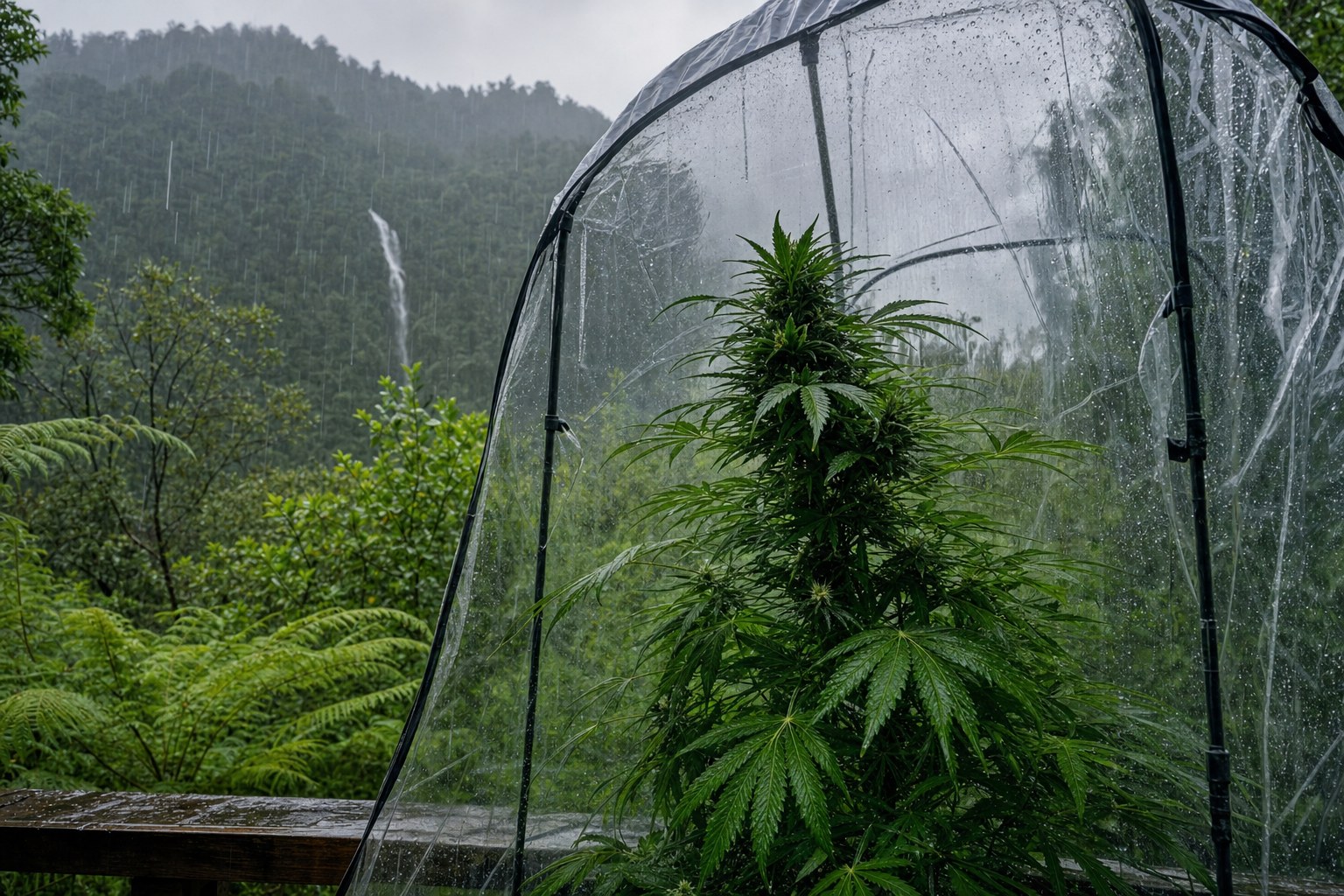
Growing weed on the West Coast of New Zealand means planning around frequent rain, high humidity, variable sunshine and fast-changing weather. Outdoor cannabis needs strong airflow, free-draining ground, shelter from severe wind and regular inspection for moisture damage. Spring is best used to establish resilient plants without letting wet roots, cold nights or crowded foliage undermine early growth.
By the Kiwi Seed Bank grow team.
Key takeaways
- West Coast cultivation is shaped by moist Tasman Sea air rising over the Southern Alps, producing frequent rain and extensive cloud.
- Free-draining soil, raised planting positions and good airflow are more valuable than simply adding more water or feed.
- Spring runs from September to November, but local temperatures and exposure can differ sharply between coastal, inland and elevated sites.
- Clear overhead cover can keep direct rain off plants, provided the structure remains open-sided and well ventilated.
- Dense foliage, trapped condensation and wet flowers increase the risk of fungal damage, so frequent inspection is essential.
- Cannabis cultivation may be restricted by New Zealand law. Check the current rules before germinating or growing any seed.
West Coast cannabis and a rain-shaped environment
The West Coast has one of New Zealand’s most distinctive growing environments. A narrow strip of coastal land sits between the Tasman Sea and the Southern Alps, with rainforest, rivers and steep catchments defining much of the landscape. For cannabis plants, the main challenge is rarely a simple lack of water. It is managing how often leaves, stems, soil and surrounding surfaces become wet.
Persistent dampness changes the priorities of an outdoor garden. In a dry region, a grower may focus on irrigation frequency and water conservation. On the West Coast, drainage, ventilation and protection from repeated downpours usually demand more attention. Containers need generous drainage holes, while plants in the ground benefit from raised positions where surplus water can move away from the root zone.
Site selection is especially important. A sunny north-facing location can capture more of the available light, but it should not sit in a hollow where cold air and moisture collect. Nearby bush may provide wind shelter, yet dense vegetation can also block morning sun and restrict airflow. A balanced site receives early light, has moving air around the foliage and offers some protection from the strongest westerly weather.
Growers should also understand the regulatory setting before making cultivation plans. Read our general overview of whether it is legal to grow cannabis in New Zealand and verify the current requirements that apply to your circumstances.
How the Tasman Sea and Southern Alps influence West Coast weather
The Tasman Sea supplies moisture to weather systems approaching New Zealand from the west. When that damp air reaches the Southern Alps, it is pushed upwards. Rising air cools, cloud forms and substantial rain can fall on the western side of the ranges. This pattern helps explain why West Coast conditions can remain wet even when places east of the divide are much drier.
For a cannabis grower, this geography creates several practical issues. Rain may arrive in repeated bands, sunshine hours can vary greatly from one week to the next, and strong winds can accompany fronts. A plant that looks comfortable during a mild morning may face driving rain and falling temperatures later that day. Garden structures therefore need to handle both water and wind without collapsing onto the plants.
A clear roof or rain cover can be useful where local rules and the site allow it. The cover should shed water beyond the root area rather than concentrating runoff beside containers. It should also sit high enough above the canopy to allow warm, moist air to escape. Fully enclosing plants in clear plastic can create condensation, excessive daytime heat and stagnant air, especially when sunshine follows rain.
Wind protection should slow harsh gusts without forming a sealed barrier. Permeable screens, established shelter at a suitable distance or a firmly anchored open-sided structure can soften exposure while retaining ventilation. Check ties, posts and roof fixings before forecast bad weather. Avoid allowing wet plastic or netting to rub against leaves, because repeated contact can damage plant tissue.
The West Coast should not be viewed as one uniform climate. Our guide to New Zealand climate regions provides wider context, but conditions still need to be assessed at garden level. Slope, elevation, distance from the sea and surrounding vegetation can all alter wind, light and overnight humidity.
Spring from September to November on the West Coast
West Coast spring is a period of increasing daylight rather than guaranteed warmth. September can remain cold and unsettled, while October often brings vigorous new growth alongside changeable weather. November generally offers longer, warmer days, although heavy rain, strong winds and cool nights can still occur.
Seedlings and young plants need particular care because their small root systems use water slowly. A large container filled with saturated mix may remain wet for too long, limiting oxygen around the roots. Begin with an appropriately sized container and move up gradually as roots develop. Use an airy growing medium that drains freely rather than dense garden soil that compacts after repeated rain.
If plants start in a sheltered position, introduce them to outdoor sun and wind gradually. Sudden exposure can stress soft indoor-grown leaves, even under West Coast cloud. Increase outdoor time across several days, beginning in mild conditions. Bring vulnerable plants back under shelter when strong wind, hail or very cold nights are expected.
West Coast spring grow calendar
September: Prioritise site preparation, drainage and weather protection. Clear blocked gutters and runoff channels, anchor covers, and observe where water pools after rain. Keep young plants sheltered from severe exposure. Growth may be slow during cool, cloudy periods, so avoid compensating with excessive watering or feeding.
October: As daylight increases, monitor root development and move plants into larger containers only when needed. Space plants early to maintain airflow as foliage expands. Remove fallen leaves and surrounding weeds that hold moisture. Inspect leaf undersides, stem junctions and the surface of the growing medium during routine checks.
November: Prepare for faster vegetative growth and occasional warm spells. Adjust ties before stems become restricted, confirm that covers do not shade the canopy unnecessarily and maintain space between neighbouring plants. Water according to the moisture in the medium, not by a fixed timetable. Containers under cover may need watering even when rain has been continuous outside.
Spring work should build a stable structure for summer. Training can help create an open, supported canopy, but avoid making many cuts immediately before a long wet spell. Damaged tissue benefits from dry air and good ventilation. Clean tools before use and remove discarded plant material from the growing area.
Rainfall, cloud cover and humidity across the region
Rainfall affects more than soil moisture. Repeated wetting can wash through container nutrients, weigh down branches and splash soil onto lower foliage. Cloud cover also reduces the energy available for photosynthesis, which may slow water use. A pot can therefore remain saturated even when the plant appeared thirsty during a previous sunny period.
Check moisture below the surface before watering. The top layer may look dry while the lower root zone remains wet, particularly in deep containers. Pot weight, drainage flow and a careful finger check can provide useful clues. Do not leave containers standing in trays of runoff. Raising pots slightly on stable feet can keep drainage holes open and allow air movement underneath.
Humidity is often highest overnight and around dawn, when cooler air encourages condensation. Morning sun is valuable because it helps dry leaves earlier in the day. Avoid routine overhead watering late in the afternoon or evening. If watering is required, direct it to the growing medium and allow enough time for stray moisture on foliage to dry before night.
Rain covers require their own inspection. Wipe away heavy condensation where practical, repair leaks and ensure runoff cannot splash back onto plants. Leaves should not press against plastic walls or roofing. During calm, humid weather, opening sides and doors can matter more than retaining warmth. Small circulation fans may assist in a powered greenhouse, but electrical equipment must be suitable for damp locations and used safely.
After a storm, inspect branch unions, ties and support stakes. Gently remove standing water from sagging cover material without dumping it over the canopy. Look for split stems, bruised leaves and pockets of crowded foliage. Prompt support and improved spacing can stop minor weather damage from becoming a larger structural problem.
Cannabis botany in persistently damp conditions
Cannabis roots need both moisture and oxygen. When soil pores remain filled with water, oxygen availability falls and normal root activity can slow. Symptoms may include drooping, pale growth or a general lack of vigour, but appearances alone do not identify the cause. Check drainage, recent weather and root-zone moisture before adding more water or nutrients.
The plant’s canopy also creates a local microclimate. Leaves release water vapour, and dense overlapping growth can hold that moisture around stems and inner foliage. On the West Coast, naturally humid air makes canopy spacing particularly important. Position plants so air can move around each one, and use gentle training to avoid a tight mass of leaves.
Flowers are more vulnerable to persistent moisture than open vegetative growth because tightly packed plant material dries slowly. Genetics, plant structure, weather and site management all influence performance, and no selection can guarantee freedom from fungal damage. Inspect flowers without squeezing them. Pay attention to discolouration, unusual softness, collapsed small leaves and stale odours, then isolate and discard affected material responsibly.
Pruning should be measured rather than drastic. Removing every large leaf can weaken the plant and expose inner growth suddenly, while leaving a crowded centre can trap humidity. Focus on damaged leaves, growth touching wet soil and selected interior shoots that block airflow. Make clean cuts with clean tools, and choose a forecast window with lower humidity where possible.
Nutrition also needs restraint during cloudy periods. Slower growth may mean slower nutrient use, while heavy rain can cause runoff from exposed containers. Keep notes on additions, plant response and weather instead of reacting to every colour change. Stable root conditions and adequate light should be assessed before changing a feeding approach.
Local variation from coastal lowlands to alpine areas
Coastal settlements may experience salt-laden wind, moderate temperatures and exposure to incoming fronts. Rinse salt deposits from structures when necessary, and position plants where they receive sunlight without bearing the full force of onshore gusts. Shelter should remain permeable enough to avoid creating a damp pocket.
River valleys and low-lying land can collect fog and cool air. Frost risk may persist later in spring away from immediate coastal influence. Avoid depressions, observe how quickly morning mist clears and favour raised, well-drained positions. Areas near rivers can also experience rapid weather and water-level changes, so never place a garden where flooding is plausible.
Foothill locations often receive intense orographic rain and can lose direct sun early as it drops behind terrain. Steeper ground may drain quickly, but erosion, runoff and difficult access introduce other concerns. Containers and structures must stand on stable surfaces. Do not rely on loose slopes or improvised supports during high wind and heavy rain.
Higher alpine areas generally have shorter frost-free periods, cooler nights and greater exposure, making outdoor cannabis cultivation more difficult. A sunny-looking site in midsummer may remain unsuitable in spring. Elevation should be considered alongside aspect, wind and the timing of local frosts.
Regional notes for West Coast growers
- Buller and northern districts: Expect humid coastal influence, heavy rain events and meaningful variation between exposed coast, valleys and inland elevations.
- Central West Coast: Frequent rainfall and rainforest surroundings make drainage, morning light and airflow central site-selection factors.
- South Westland: Very high rainfall, cooler conditions and isolated weather systems can narrow useful outdoor windows. Robust shelter and frequent observation are important.
- Elevated sites: Plan for lower temperatures, stronger wind and a shorter season than nearby coastal lowlands.
Successful planning begins with observation. Record rain, direct sunlight, overnight temperatures, drainage time and prevailing wind at the actual site. Use those notes to decide whether outdoor cultivation is practical and how much shelter is needed. On the West Coast, working with the local microclimate is more reliable than applying a calendar designed for a drier New Zealand region.