

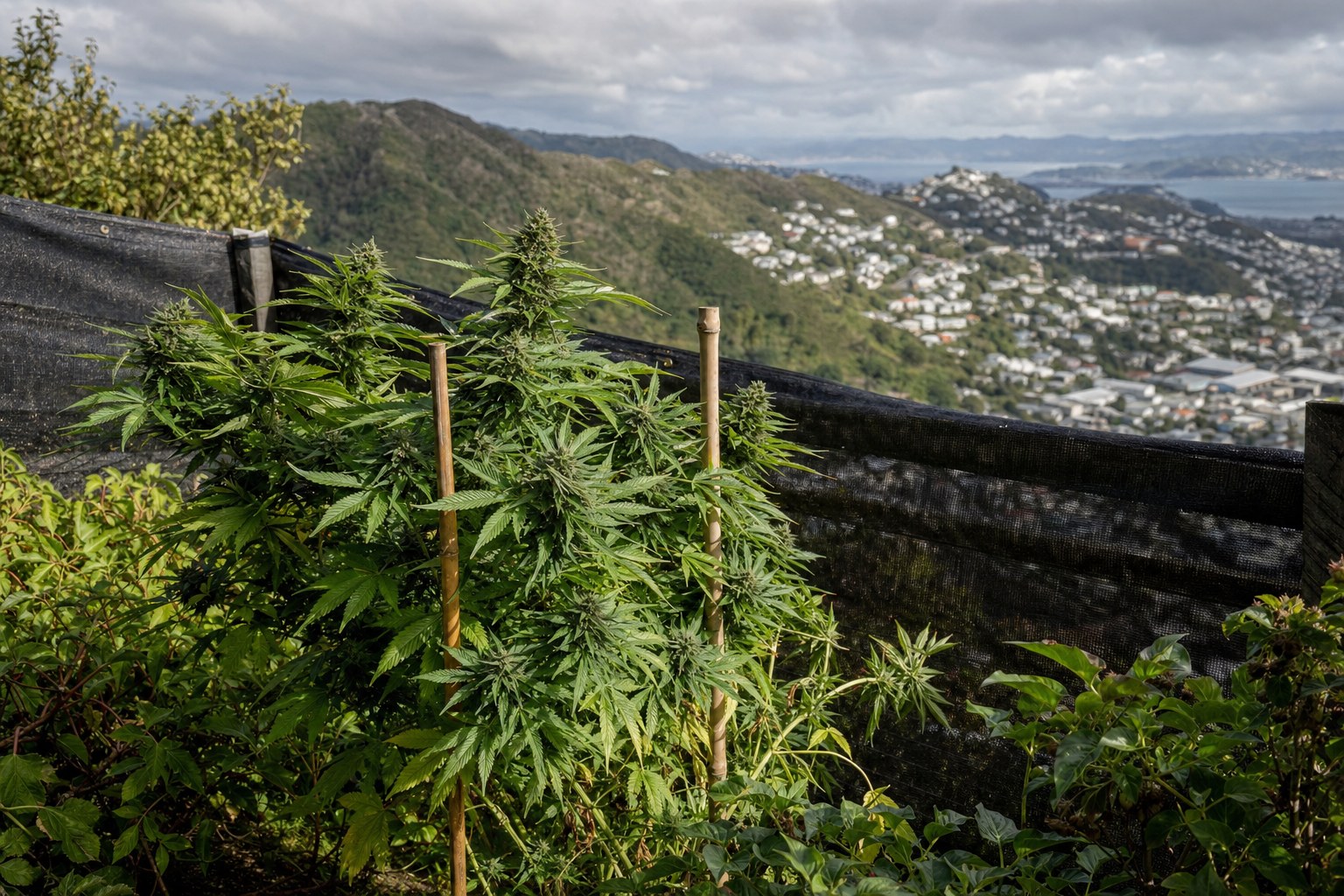
Growing weed in Wellington calls for careful attention to wind, shelter and local microclimates. Strong Cook Strait airflow can dry foliage, bend stems and cool exposed sites, while a sheltered position nearby may be calmer and warmer. Start spring by assessing wind direction, securing plants and improving shelter without blocking sunlight or airflow.
By the Kiwi Seed Bank grow team.
Key takeaways
- Wellington’s prevailing north-westerly winds and strong southerly changes make shelter a central part of outdoor site planning.
- Use a permeable windbreak rather than a solid barrier, which can create turbulence on its sheltered side.
- Stake plants early, allow room for stem movement and check ties regularly as growth accelerates.
- Keep shelter far enough from foliage to maintain airflow and access to spring sunlight.
- Hills, valleys, buildings and coastal exposure can produce sharply different conditions within a short distance.
- Confirm the rules that apply to your circumstances before considering cannabis cultivation in New Zealand.
Cannabis and Wellington’s wind-shaped environment
Wellington is known for persistent wind because the surrounding terrain and Cook Strait funnel moving air through a relatively narrow passage. For an outdoor cannabis plant, this exposure can be both useful and demanding. Moderate airflow helps moisture leave leaf surfaces, but repeated strong gusts place mechanical pressure on stems, branches, containers and support structures.
A plant in an exposed position may remain shorter, use more water on bright windy days and show physical wear along leaf edges. Containers can topple, branches can rub against supports, and loose growing media can dry unevenly. The answer is not to remove every trace of airflow. Instead, aim to soften the strongest gusts while retaining ventilation around the canopy.
Observe a proposed site before placing plants. Look at moving grass, shrubs, washing lines and flags during several kinds of weather. Check conditions in the morning, afternoon and after a wind change. A corner that seems calm on one day may sit directly in the path of a north-westerly or southerly on another.
Build shelter that filters wind
A permeable windbreak allows some air through and slows it progressively. Wind mesh, spaced timber battens or established shrubs can work better than a completely solid sheet. Air striking a solid fence is forced over and around it, often rolling into turbulent eddies behind the barrier. These downdraughts can buffet a plant even though it appears to be on the sheltered side.
Position shelter on the windward side of the growing area, but avoid enclosing the plant on every side. Leave clearance between foliage and the barrier. This supports ventilation, gives branches room to move and makes routine inspection easier. Ensure any structure is firmly anchored for Wellington conditions rather than relying on light stakes pushed shallowly into soil.
Support plants before strong growth begins
Install stakes while plants are small, when there is less chance of damaging a broad root area. Drive each stake securely into firm ground and use wide, soft ties. A figure-eight tie can keep the stem from rubbing directly against the stake. Leave enough slack for gradual thickening and a small amount of natural movement, which helps the plant develop structural strength.
Inspect supports weekly and after severe weather. Loosen tight ties, replace worn material and add support to heavy side branches where needed. For containers, choose broad, stable pots and place weight low rather than attaching a tall plant to an unsecured pot. Confirm that drainage holes remain open after moving or bracing the container.
Cook Strait and the region’s exposure to strong winds
Cook Strait separates the lower North Island from the upper South Island and strongly influences Wellington’s weather. Airflow is channelled between land masses and across rugged terrain, so wind can accelerate near headlands, ridgelines and gaps. The region commonly experiences forceful north-westerlies, while southerly changes can arrive with cooler air and abrupt shifts in conditions.
North-westerly exposure can increase moisture loss from containers and upper soil layers, particularly when sunshine and low humidity occur together. Check moisture by feeling below the surface rather than watering according to a fixed timetable. Water deeply enough to moisten the active root zone, then allow suitable drainage. Constantly wet media is not an effective response to wind-driven drying.
A southerly may bring lower temperatures and rain. Moveable plants can be shifted to a position that remains bright but is less exposed to direct gusts. Plants in the ground need permanent supports and drainage suited to the site. After a major change, inspect stems, branch junctions, ties and the base of the plant. Refirm loosened stakes without pressing heavily over the root zone.
Salt-bearing air is another consideration for sites close to the coast. The degree of exposure depends on distance, elevation, wind direction and intervening terrain. Existing vegetation provides useful clues: scorched windward foliage, one-sided growth and sparse canopies can indicate a demanding coastal position. A protected courtyard or leeward slope may offer a more moderate setting.
Hills, valleys and built areas create varied local conditions
Wellington’s steep hills and dense built areas produce many small climate zones. Elevation can bring greater exposure and cooler nights, while a valley floor may collect cool air. A north-facing slope generally receives stronger sun than a shaded south-facing site, although buildings and nearby ridges can alter the actual light window.
Urban walls and paving absorb warmth during sunny periods and release it later, but they can also redirect wind. Air may accelerate between buildings or around corners, creating a narrow wind tunnel. Balconies are especially variable because turbulence increases around edges and at height. Secure every container, saucer, stake and screen so that nothing can become airborne.
Map direct sun over a full day rather than judging a site at noon. In spring, surrounding obstacles cast longer shadows than they do in midsummer. A location receiving good September light is likely to remain useful as the sun rises higher, while a deeply shaded corner will not be improved by wind shelter alone.
Soil also varies across the region. Some hillside sites drain rapidly, whereas compacted urban ground may hold water or shed it sideways. Dig a small inspection hole after rain and observe moisture, texture and drainage. On slopes, stabilise containers and avoid positions where runoff scours soil from around roots. Mulch can moderate surface moisture, but keep it clear of the main stem and check that it does not conceal persistent saturation.
Spring in Wellington runs from September to November
New Zealand’s spring extends from September through November. In Wellington, this period can alternate between mild sunny days, cold southerlies, heavy rain and forceful wind. Calendar dates alone do not establish suitable outdoor conditions. Use current weather, site temperature, daylight and plant size to guide each step.
Wellington spring grow calendar
September: Assess the site before relying on it. Record direct sunlight, prevailing wind, drainage and overnight conditions. Prepare permeable wind shelter, anchor containers and install supports. Young plants are vulnerable to sudden cold and physical damage, so gradual exposure to outdoor conditions is important. Begin with short periods in a protected location and increase exposure progressively.
October: Daylight and average warmth increase, but unsettled weather remains common. Review windbreak height and stake tension as plants grow. Rotate containers periodically if one side receives much more light, unless supports make movement unsafe. Check moisture below the surface after windy days and inspect leaf undersides, branch junctions and new growth as part of a regular garden routine.
November: Growth may accelerate as summer approaches. Increase the clearance between foliage and wind mesh, update branch support and confirm that containers cannot topple. Water demand can rise, especially in sunny north-westerlies. Avoid overcrowding plants within a small sheltered zone, as dense foliage and restricted airflow can leave moisture lingering after rain.
Keep a simple record throughout spring. Note minimum overnight temperature, strong wind events, watering, plant movement and support adjustments. A local record is more informative than assumptions based on Wellington as a whole, because two sites on opposite sides of a ridge can experience very different conditions.
Sheltered and exposed sites can differ across short distances
A few metres can separate a harsh site from a workable one. The windward side of a fence may receive direct pressure, while the leeward side has lower wind speed but some turbulence. A recessed doorway may be calm yet too dark. A sunny deck may offer excellent light but become highly exposed above roof level.
Compare candidate positions using repeated observations. A light ribbon tied securely to a fixed object can show airflow direction, provided it cannot detach. Watch how it behaves at plant height rather than above a fence. Also inspect the site during rain to identify dripping roof edges, splashback and pooled water.
The best position usually balances several factors rather than maximising one. Seek useful direct sunlight, filtered wind, free drainage, access for inspection and enough space for the mature plant. If no single location supplies that balance, a moveable container can offer flexibility, but only when it can be handled safely and secured after every move.
Practical regional notes
- Exposed ridges and hilltops: Prioritise low, strongly anchored shelter and early branch support. Avoid tall screens that act like sails.
- Valleys and low pockets: Watch for cool air settling overnight, reduced morning sun and slow drying after rain.
- Coastal suburbs: Assess salt-bearing wind, sudden gusts and corrosion on metal fastenings or support frames.
- Dense urban areas: Check for building shade, reflected heat, wind tunnels and water falling from roofs or balconies.
- Leeward slopes: These may offer useful shelter, but confirm that trees, ridges or buildings do not remove too much direct light.
Wellington within New Zealand’s wider climate regions
Wellington sits between the milder north and the cooler South Island, with maritime influence and unusually prominent wind exposure. General advice for warmer, calmer parts of New Zealand may not transfer directly to a Wellington hillside. Likewise, guidance for colder inland districts may overstate the likelihood of sustained low temperatures at a sheltered coastal site.
For broader comparisons, read the New Zealand climate regions guide. Use regional information as a starting point, then refine it through observation at plant height. Aspect, altitude, distance from the coast and nearby structures all shape the conditions an individual plant experiences.
Legal status must also be considered separately from climate suitability. Cannabis cultivation is regulated in New Zealand, and a favourable growing site does not establish that cultivation is permitted. Review the current framework in our guide to cannabis growing law in New Zealand and confirm the rules that apply before taking action.
A balanced approach to Wellington shelter
Successful site planning in Wellington is less about defeating the wind than managing its effects. Filter strong airflow, support stems early, maintain light and ventilation, and inspect the site after each major weather change. Pay particular attention to transitions between warm north-westerlies and cold southerlies.
Start with conservative spring exposure and adapt from direct observation. If leaves are constantly whipped, branches rub against supports or containers shift, strengthen the setup or choose a calmer position. If foliage remains wet and still behind dense screening, open the shelter or increase clearance. A balanced site should soften damaging gusts without becoming dark, enclosed or persistently damp.
Wellington’s terrain means there is no single setup for every garden. A carefully observed courtyard, hillside or coastal site can each require a different combination of wind mesh, staking, container stability and drainage. Let the specific microclimate guide decisions, and revisit those decisions as plants and seasonal conditions change.