

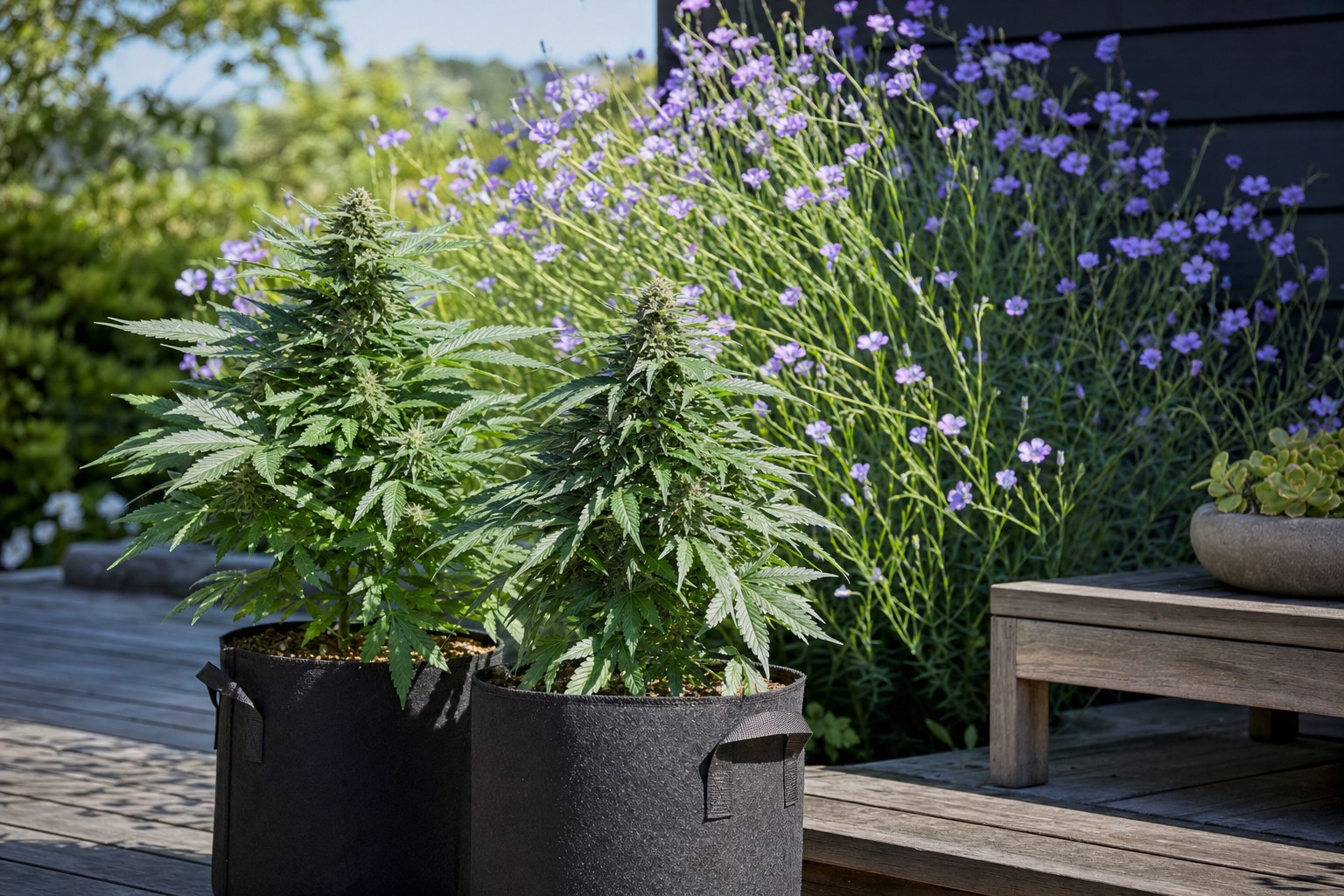
Autoflower seeds in NZ can make good use of a short or changeable southern summer because the plants flower according to age rather than seasonal daylight. For the best outdoor prospects, choose climate-suitable genetics, start during settled warm weather, use free-draining containers and position plants where they receive strong sun without being exposed to damaging wind or prolonged rain.
Key takeaways
- Autoflowers run on an internal schedule: most begin flowering after several weeks of vegetative growth, regardless of day length.
- Timing still matters: warm nights, bright days and a reasonably settled forecast give young plants a stronger start.
- Match genetics to the site: compact, fast plants may suit cooler districts, while airy structures can be useful in humid areas.
- Protect the short vegetative phase: transplant stress, saturated roots and early damage can permanently limit plant size.
- Stay flexible: portable containers, wind shelter and rain cover let New Zealand growers respond to fast weather changes.
Autoflowers and New Zealand’s short summer
New Zealand does not have one uniform summer. Northland may offer a long period of warmth but also carries high humidity, while inland South Island districts can produce hot afternoons followed by cold nights. Coastal wind, sudden southerly changes and heavy rain can interrupt otherwise favourable weeks almost anywhere. Autoflowers offer a practical way to fit a complete plant cycle into a selected part of that variable season.
The term “short summer” is therefore less about the number of calendar days and more about the reliable cultivation window. A site may receive months of long daylight yet only a limited run of warm, comparatively dry conditions. Because autoflowers do not need autumn’s shorter days to initiate bloom, growers can aim to place their flowering stage within the most useful section of summer.
How autoflowers differ from photoperiod plants
Photoperiod cannabis responds to changing hours of light and darkness. Outdoors in New Zealand, a photoperiod plant generally develops vegetatively through the long days before flowering as daylight decreases later in summer. An autoflower instead carries age-linked flowering behaviour. Depending on the genetics and conditions, it commonly shifts into flowering within a few weeks of germination and continues even under long midsummer days.
This difference creates a compressed timetable. An autoflower has little opportunity to replace vegetative time lost to poor drainage, root disturbance, cold or extended shade. It may recover visibly, but its internal schedule continues. Good preparation before germination is consequently more important than trying to correct basic site or container issues after growth has begun.
Autoflowers are often compact, although final dimensions vary widely. Container volume, sunlight, root health, temperature and genetics all influence size. Descriptions such as “fast” or “compact” should be used as comparisons rather than fixed promises. Outdoor conditions remain a major part of the outcome.
Benefits and trade-offs for outdoor growers
The primary benefit is scheduling freedom. A grower can target midsummer for flowering instead of waiting for late summer and autumn. This can reduce exposure to cool nights and extended wet spells near the end of the outdoor season. A fast plant may also suit a small, sunny courtyard or a site where a large photoperiod specimen would be difficult to manage.
Several sequential starts may be possible across a warm northern season, but each later sowing receives a different combination of sunlight and temperature. Staggering plants should not be mistaken for identical repeat runs. The late crop may experience shorter days and damper weather, while an early crop can encounter cool spring nights.
The central trade-off is limited recovery time. Heavy training, repeated repotting or a major nutrient mistake can consume a significant portion of the vegetative stage. Smaller plants can also dry quickly in undersized pots during hot north-westerly weather. Autoflowers reward steady, low-stress cultivation more than frequent intervention.
Planning around southern-hemisphere seasons
Outdoor planning in New Zealand should follow local conditions rather than a date copied from another hemisphere. Spring runs from September to November, summer from December to February and autumn from March to May. However, elevation, aspect and distance from the sea can shift practical planting conditions by several weeks.
Matching the grow window to local daylight and weather
For many areas, late spring to early summer provides a useful starting range once the site has warm soil, moderate night temperatures and strong daylight. Starting too early can leave seedlings sitting in cold, wet medium. Starting very late may place flowering plants into shortening days, heavier dew and less dependable autumn weather.
Work backwards from the approximate cycle stated for the selected seeds, then add some allowance for outdoor variability. A cycle described in weeks is an estimate, not a harvest appointment. Cool nights, cloudy periods and root-zone stress can alter development. The aim is to place the most demanding flowering weeks within a historically favourable local window.
Grow calendar
- September: assess sun angles, clean containers, improve drainage and identify shelter. Many outdoor locations are still too cold or unsettled for an exposed start.
- October: monitor overnight conditions and prepare the final growing medium. Warmer northern or protected sites may begin to offer suitable windows.
- November: a common starting period where frost risk has passed and nights are milder. Keep young plants protected from spring wind and pounding rain.
- December: long days and rising temperatures support rapid growth. Check small containers frequently and maintain airflow around foliage.
- January: strong sun can drive flowering and water use. Shade the outside of dark pots if roots become excessively hot, but keep the canopy in direct light.
- February: humidity, heavy showers or dry spells may all occur. Inspect dense flowers closely and move portable plants under cover during prolonged rain.
- March: later plants face cooler nights and increasing dew. Prioritise airflow, morning sun and protection from extended wet weather.
Regional considerations from Northland to Central Otago
Northland and Auckland: warmth can support an extended window, but humidity and subtropical rain are major considerations. Choose an open structure, generous spacing and a position that receives early sun. Avoid placing pots against a damp wall or among dense vegetation where still air remains trapped.
Waikato, Bay of Plenty and central North Island: conditions range from warm coastal sites to cooler inland and elevated locations. Fog, heavy dew and sudden rain can make airflow important. Frost pockets need later timing than nearby slopes, and volcanic or clay-heavy garden soil may need substantial drainage improvement if it is used in a mix.
Gisborne, Hawke’s Bay, Wairarapa and Manawatū: these regions can deliver bright, dry periods alongside strong wind. Shelter should filter wind rather than create deep shade or a sealed pocket. Containers may require close moisture checks during hot, dry spells, especially on north-facing decks.
Wellington, Nelson, Tasman and Marlborough: Nelson and Marlborough often offer abundant sun, while exposed parts of Wellington can be extremely windy. Stable pots and permeable wind screens are valuable. Coastal salt exposure also favours a position set back from direct spray.
Canterbury and the West Coast: Canterbury sites may experience hot, drying north-westerlies, cool nights and late cold snaps. The West Coast is generally wetter, making cover and airflow central to site selection. In either region, portable pots allow quick responses to contrasting conditions.
Otago, Southland and Central Otago: the practical outdoor window is usually tighter. Central Otago can have intense sun and low humidity by day but sharp temperature drops overnight. Coastal Otago and Southland tend to be cooler and can be damp. Fast genetics, warm containers, a sheltered north-facing aspect and conservative timing are useful priorities.
Choosing autoflower seeds in NZ
Seed selection should begin with the real site, not an idealised garden. Record direct-sun hours, wind exposure, typical summer night temperatures, humidity and the ability to move or cover plants. Then compare those conditions with each option’s approximate cycle, stature and growth structure.
Comparing plant size, cycle length and climate suitability
Cycle length is useful for narrowing choices, but it should be read alongside plant form. A very compact plant may fit a sheltered balcony yet produce tightly grouped flowers that demand careful humidity management. A slightly taller, more open plant may be easier to ventilate but less suitable for an exposed deck.
Consider the available root volume too. A larger container offers a moisture and nutrient buffer, but it is heavier to move and can stay wet for longer after rain. A small pot is portable and warms quickly, although it leaves less room for watering errors. Final size claims remain approximate because outdoor sunlight and temperature vary.
Selecting genetics for exposed, humid or cooler sites
For an exposed location, favour sturdy, compact growth and plan physical shelter. In humid northern or western districts, look for less congested branching and a cycle that can finish within a relatively settled period. For cooler southern sites, prioritise a fast schedule and plants known for manageable stature, then place them where morning and midday sun warm the canopy and root zone.
Feminised autoflower seeds simplify space planning because growers are not allocating limited summer time and containers to regular seedlings of unknown sex. Even so, seed format does not remove environmental variation. Starting more plants than the site can comfortably hold may create crowding, shade and stagnant air later.
Setting up an outdoor summer grow
Complete the main setup before germination. Fill containers, test how quickly they drain, check the sun path and establish wind protection in advance. Autoflowers move quickly, so every day spent improvising basic infrastructure is time the plant cannot add back to its early growth phase.
Picking a sunny and sheltered position
A north-facing or north-west-facing position often receives the strongest useful sunlight, although local hills, fences and buildings can change the pattern. Aim for several hours of direct sun, with morning light especially valuable for drying overnight moisture. Observe the site across a full day rather than judging it at midday.
Shelter should soften gusts without blocking airflow. Slatted screens, open fencing or nearby shrubs at a sensible distance work better than an enclosed corner. Secure lightweight pots and leave space between plants. If rain cover is used, keep its sides open and ensure runoff does not pour back into containers.
Preparing containers, drainage and growing medium
Starting in the final container avoids a later transplant, though careful transplanting from a small starter can also work. Whichever method is chosen, the root zone should remain airy and drain freely. Containers need clear holes that cannot become sealed against a flat deck or clogged by compacted material.
Use a light, consistent growing medium rather than dense garden soil alone. The mix should hold enough moisture for roots while releasing excess water and allowing oxygen through. Fabric pots provide strong aeration but can dry rapidly in wind. Rigid pots retain moisture longer and may need extra attention to drainage and heat around dark sides.
Water according to the plant and medium, not a fixed timetable. Young roots occupy only part of the pot, so repeatedly saturating the entire container can keep it wet for too long. As the plant grows, water demand increases quickly. Check pot weight, surface moisture and weather conditions before deciding.
Keeping the short cycle on track
Use restrained plant handling. Gentle leaf positioning or minimal low-stress shaping may improve light distribution, but major pruning and repeated bending can cost valuable growth time. Avoid making several changes at once; gradual adjustments make it easier to see how the plant responds.
Inspect plants regularly for pests, damaged leaves, blocked drainage and moisture held within dense growth. After storms, shake off pooled water gently and restore spacing. During heat, check pots before the hottest part of the afternoon. Consistency is more valuable than chasing rapid changes with excessive feeding or watering.
Kiwi Seed Bank grow team tip: plan for the worst likely summer weather at your site, then let good days provide the bonus. A movable pot, reliable drainage and a bright sheltered position offer more practical value than a complicated schedule.
Making the most of a New Zealand summer
Autoflowers do not make outdoor growing independent of weather, but their age-based flowering can help growers target New Zealand’s brightest and warmest weeks. Success begins with realistic regional planning, suitable seed selection and a prepared final site. Keep the root zone balanced, give the canopy light and moving air, and respond early to changing conditions.
The best window differs from a humid Northland garden to a high Central Otago terrace. Use regional dates as a starting point, observe the actual microclimate and leave room for uncertainty. When the plant’s short timetable is matched to a settled local window, autoflowers can be a practical option for compact outdoor summer cultivation.