

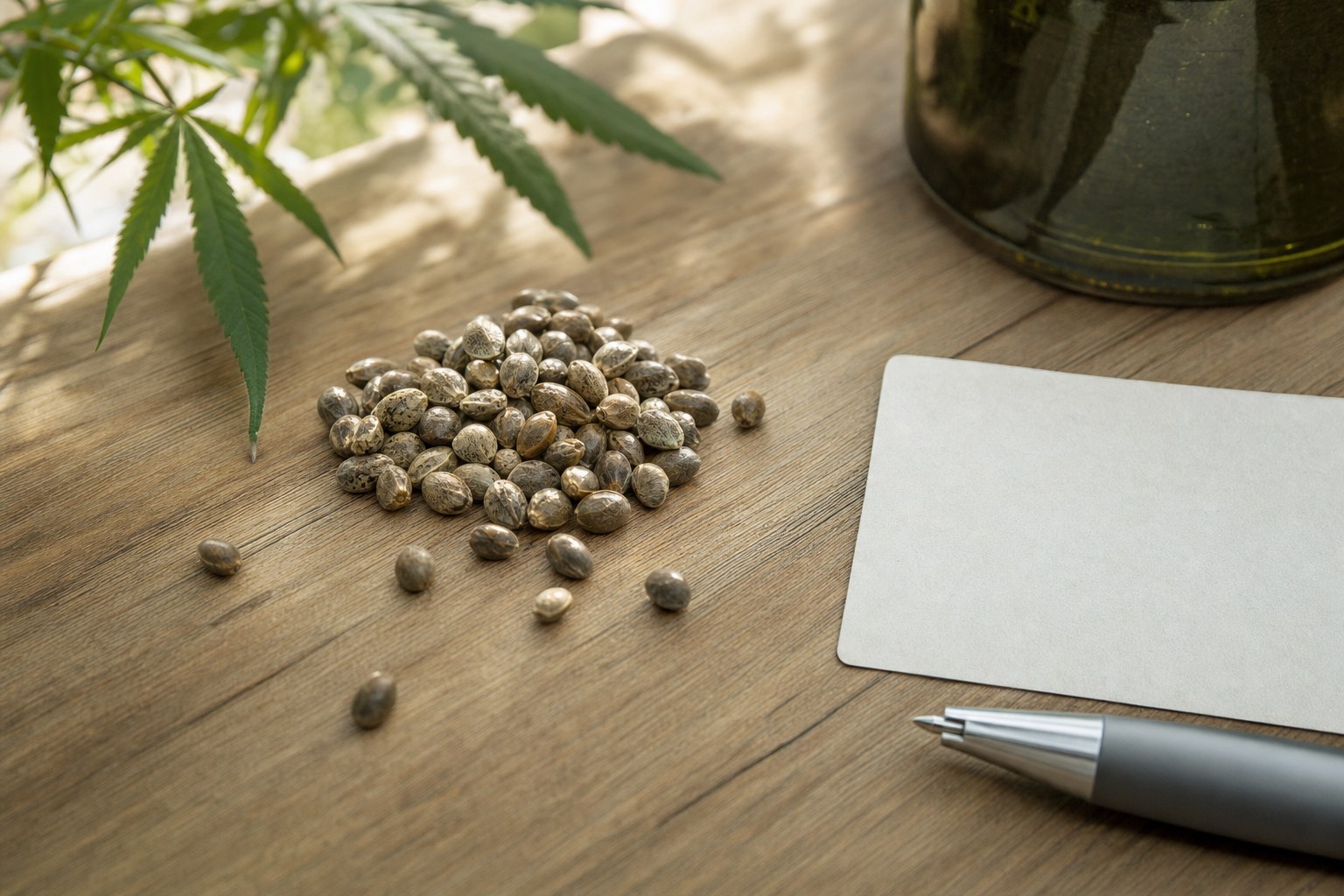
Are cannabis seeds legal in NZ? Generally, cannabis seeds are controlled items under New Zealand law. Buying, possessing, importing, germinating or cultivating them without appropriate legal authority may amount to an offence. Limited licensed pathways exist for approved industrial, research and regulated cannabis activities, but ordinary seed ownership does not automatically fall within those pathways.
Key takeaways
- Cannabis seeds are not generally legal collectables: describing seeds as souvenirs, collectables or novelty products does not override New Zealand law.
- Possession and supply can carry legal risk: the rules are not limited to germinated plants or harvested cannabis.
- Importing adds border and biosecurity requirements: a parcel passing through an overseas checkout does not make its contents lawful to bring into New Zealand.
- Germination is cultivation: placing a seed in conditions intended to make it sprout can create additional legal exposure.
- The 2020 referendum did not change the law: the proposed legal cannabis framework did not receive majority support.
- Licensed exceptions are narrow: regulated activities require the relevant approvals and must stay within their conditions.
- Check current official information: laws, regulations, import standards and licence settings may change.
This article provides general information for New Zealand readers and is not legal advice. Individual circumstances can differ, and anyone making a decision involving cannabis seed should obtain current guidance from the responsible authorities or an appropriately qualified New Zealand lawyer.
Are cannabis seeds legal in NZ?
For an ordinary member of the public, the practical answer is generally no: cannabis seeds are not freely lawful to possess, purchase, supply, import or use for cultivation. New Zealand’s controlled-drug framework covers cannabis beyond flowering material. A seed does not have to contain an intoxicating compound, be germinated or be attached to a plant before the law can become relevant.
This distinction is important because online discussions sometimes claim that ungerminated seeds are lawful until somebody attempts to grow them. That is not a safe description of the New Zealand position. Rules from another country do not apply here, and an overseas seller’s willingness to dispatch an order is not evidence that a New Zealand buyer may lawfully receive it.
The wording used in an advertisement also has little practical value if the item itself is controlled. Labels such as souvenir, bird seed, genetic archive or adult novelty do not create an exemption. Authorities can consider the actual item, the surrounding facts and the activity taking place rather than relying on a marketing label.
There are regulated exceptions. Industrial hemp, approved research, seed production and regulated cannabis operations may take place under specific legal and licensing arrangements. These pathways are not blanket permissions for home seed collections or private cultivation. An approval may be limited by site, cultivar, purpose, security arrangements, record keeping, personnel, quantity and other conditions.
People should also distinguish viable cannabis seed from food ingredients made from hemp seed. Commercially prepared hemp seed foods may sit within a separate regulated category, especially where the product cannot be used for sowing. A packet sold as food is not the same thing as viable seed intended for germination. Its lawful commercial presence does not establish a right to import, possess or sow viable cannabis genetics.
How New Zealand law classifies cannabis seeds
New Zealand’s Misuse of Drugs Act establishes the central controlled-drug framework. Cannabis plant material, including relevant fruit and seed, falls within that framework unless a particular exclusion or lawful authority applies. The classification matters because conduct involving a controlled item can be restricted even before any plant grows.
Classification is only one part of the legal picture. Different provisions may apply to possession, procurement, supply, importation, exportation, production and cultivation. The facts can also affect the seriousness of an alleged offence. Quantity, communications, equipment, financial arrangements and evidence of intended supply may all be relevant to an investigation.
A person should not assume that low cannabinoid potential places seed outside cannabis law. Seeds may have little or none of the compounds associated with mature flowers, yet the legislation can classify them by their relationship to the cannabis plant rather than by their immediate effects. Likewise, a feminised, regular or autoflowering label does not change the basic legal category.
Industrial hemp can create confusion. Hemp is cannabis managed within a tightly controlled regulatory setting, not an unrestricted garden crop. A hemp-related licence or approval applies to the authorised people, activities, locations and plant material described by that permission. It does not give every person the ability to acquire seeds or grow plants merely because a variety is described as low-THC hemp.
Buying, possessing and importing seeds
Buying seed from within New Zealand can involve both possession and procurement issues. Supplying or offering controlled seed may raise separate concerns for the person sending it. A private sale, swap, gift or free sample is not necessarily outside the rules simply because no profit is involved. Giving a seed to a friend may still be legally significant.
Ordering from overseas adds another layer. Import controls operate separately from the question of whether seed may be possessed after arrival. Customs controls and biosecurity rules can both apply. Seeds for sowing are regulated because they may carry pests, diseases, weeds or other biological risks, so imported plant material may need to meet a relevant import health standard and documentation requirements.
Meeting a general plant-seed biosecurity requirement would not override controlled-drug restrictions. Equally, having permission connected with a controlled activity would not automatically satisfy every biosecurity obligation. When two or more legal regimes apply, compliance with one does not erase the others.
International mail should not be viewed as a legal loophole. Parcels can be assessed at the border, and undeclared, incorrectly declared or restricted goods may be intercepted. A refund policy, discreet packaging or a claim that an order is guaranteed to arrive has no bearing on New Zealand law. The recipient may still face questions about the order and its intended use.
Possession can also be broader than carrying an item in a pocket. Depending on the facts, control over goods stored in a house, vehicle, container or shared location may be relevant. Anyone who unexpectedly receives suspected cannabis seed should avoid planting, distributing or forwarding it and should seek current official or legal guidance about the proper next step.
Germination and cultivation rules
Germination moves the issue beyond seed possession and towards cultivation. Putting viable seed into water, soil, propagation media or another environment with the intention of producing a plant can be evidence of a cultivation activity. The plant does not need to reach maturity, display a particular sex or produce flowers before legal concerns arise.
Home cultivation for personal use is not generally authorised in New Zealand. A small number of plants, a private property, an indoor tent or an intention not to sell does not create a general exemption. Personal motivation may be part of the factual context, but it does not turn unauthorised cultivation into an approved activity.
The same applies to common seed categories. Feminised seeds, autoflowering seeds, regular seeds and seeds marketed as low-THC remain cannabis genetics. Their growth pattern, expected colour, aroma, size or flowering period does not provide permission to germinate them.
Regulated cultivation can occur where the correct licence or authority exists. Such approval may impose detailed requirements covering secure facilities, authorised varieties, plant counts, storage, disposal, records, testing and movement between locations. Working near a licensed site, supplying equipment to one or knowing a licence holder does not place a person under that licence.
Readers looking for a broader explanation of the cultivation position can read is it legal to grow cannabis in NZ. The central point is that seed possession and cultivation are related but distinct legal questions; avoiding germination does not necessarily make possession lawful.
Regional notes
National controlled-drug law applies throughout New Zealand, including the North Island, South Island, Stewart Island Rakiura and offshore islands within New Zealand jurisdiction. Moving from Auckland to Canterbury, Otago, Southland or another region does not create a different right to possess or germinate cannabis seed.
Local climate also has no effect on legal status. A warm Northland spring, a sheltered Nelson garden or a cool southern autumn may change horticultural conditions, but not the need for lawful authority. Advice based on southern-hemisphere sowing seasons should not be mistaken for legal permission to grow.
Practical administration and enforcement interactions may involve different local offices, ports, airports or councils, yet the principal national rules remain. Local planning, building, fire, environmental and workplace requirements may additionally affect a licensed commercial site. Those requirements sit alongside, rather than replace, national drug controls and licence conditions.
What the 2020 referendum changed
The 2020 cannabis referendum asked voters whether they supported a proposed legal and regulatory framework. The proposal did not receive majority support. Because it was not approved and the proposed bill did not become law, the referendum did not legalise recreational cannabis, home cultivation or ordinary possession of cannabis seeds.
This remains a frequent source of confusion. Public debate, publication of a draft framework and the holding of a nationwide vote were politically significant, but they did not themselves amend the controlled-drug rules. Statements about what the proposal would have allowed should not be read as descriptions of current law.
The proposed model included tightly regulated settings rather than an unrestricted market. Even if someone remembers discussion of home-grown plants or licensed supply, those were elements of a proposal, not permissions that came into force. Our detailed overview of the 2020 cannabis referendum in NZ explains that distinction.
Separate regulated cannabis and industrial hemp schemes can still exist under current law. Their presence does not mean the referendum passed, nor does it create a general public entitlement to cannabis seeds. Each scheme has its own eligibility criteria, applications, conditions and oversight.
Check current official guidance
Cannabis and import rules can change through legislation, regulations, court decisions, licence settings and updated border standards. Before relying on any article, check the latest consolidated New Zealand legislation and current guidance from the agencies responsible for controlled drugs, regulated cannabis activities, Customs and biosecurity.
When checking guidance, confirm that it applies to the exact activity under consideration. Possession, importing, commercial cultivation, industrial hemp, research, food products and seed for sowing may be addressed separately. Also check the publication or update date, definitions, exemptions, schedules and any transitional provisions.
If a licence is involved, read the actual conditions rather than relying on a summary. Confirm who is authorised, which premises are approved, what material is covered, and whether acquisition, storage, sowing, transport, supply or disposal requires additional permission. Keep in mind that an application or enquiry is not the same as an issued authority.
For personal circumstances, professional legal advice is the most reliable way to understand how current law applies. Do not rely solely on forum comments, social media clips, overseas information, product descriptions or old referendum material. If official pages appear inconsistent, ask the responsible agency for clarification before taking action.
Bottom line: cannabis seeds are generally controlled in New Zealand, and ordinary possession, acquisition, importation or germination can carry legal risk. Narrow licensed pathways do not create a general exception for personal collections or home growing.
Prepared by the Kiwi Seed Bank grow team for general educational purposes. This article is not legal advice and does not guarantee any particular legal outcome.